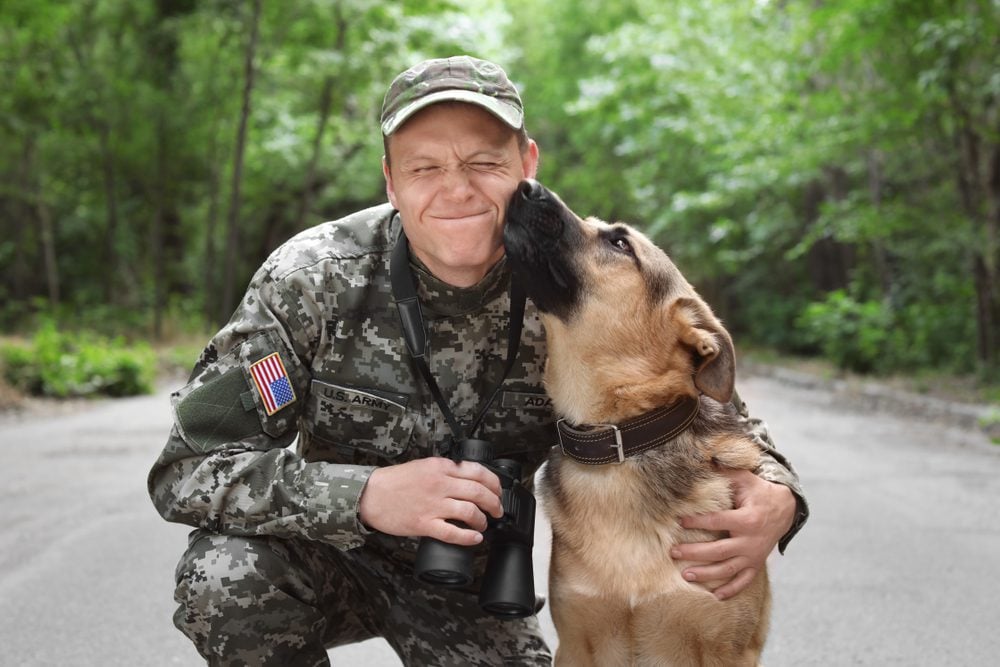
Unfortunately, there are many veterans who suffer from disabilities as a result of their time serving their country. Mental disabilities like PTSD are some of the most common, but some veterans may also have been injured during service and thus have life-altering physical disabilities.
Regardless of the disability, a service dog can often help veterans regain some amount of independence in their daily lives. However, a dog is a living being and, as such, requires care, including medical care.
The U.S. Department of Veterans Affairs (VA) offers a program that provides some financial support for veterans with service dogs. In this article, we will explain what benefits Veterans Affairs offers, how to qualify and apply for these benefits, and how to go about getting a service dog that is eligible for these VA benefits.
What Benefits Does VA Provide for Service Dogs?
The Service Dog Veterinary Health Benefits program works like an insurance program and is offered to veterans to help them pay for certain costs of owning a service dog. Though Veterans Affairs will not cover the cost of training or purchasing a service dog, it will provide financial support for some equipment and veterinary care for one service dog.
Equipment that Veterans Affairs will pay for includes anything that is required for optimal use of the service dog; this could be things like harnesses, leashes, or backpacks. They will also pay for replacements of these items.
Veterans Affairs will cover the cost of prescription medications, one dental procedure requiring sedation per year (VA will not cover unsedated dental procedures), office visits for medical procedures, vaccinations, and some prescription foods (on a case-by-case basis).
Though Veterans Affairs will not cover the cost of the service dog, it will pay for travel expenses associated with obtaining a service dog. This is a fantastic perk since many veterans may live in areas where eligible service dog training is not readily available.
There are a number of expenses tied to owning a service dog that veterans will be responsible for paying for. These include but are not limited to food, treats, toys, grooming, boarding or pet sitting, and over-the-counter medications.
In some cases, there may be other costs a veteran is responsible for. The Service Dog Veterinary Health Benefits program is essentially an insurance program, except Veterans Affairs covers the cost of premiums, deductibles, copays, etc. In an instance where the cost of the dog’s care exceeds the maximum amount provided by the policy, the veteran will be required to pay the amount not covered by the policy.
How to Qualify for VA Service Dog Benefits
As you can see, Veterans Affairs will cover the cost of most of the veterinary care that a service dog would require. This can be a big help financially. However, not everyone will be able to reap these benefits as there are specific qualifications one must meet to be eligible.
Before you can get benefits from Veterans Affairs, you must apply for VA Health Care. You can apply at the Health Administration Enrollment section of a VA medical facility or register online.
Once you’ve been registered, you’ll need to meet with a specialist. This specialist will evaluate your need for a service animal. If they determine a service dog to be an appropriate method of treatment for your disability, they will help you move forward with receiving benefits from Veterans Affairs.
Once you have been approved for VA Health Care, not only will your request for benefits be sent through the proper channels, but you’ll also be referred to a service dog provider. Once you have a trained service dog, you will need to provide Veterans Affairs with a certificate showing completion of a training program by an accredited service dog provider. Let’s talk about the process of getting a service dog next.
How to Get a Service Dog
In order to qualify for VA benefits for your service dog, you will need to get a dog through a provider accredited by either Assistance Dogs International or the International Guide Dog Federation.
Once you’ve been approved for a service dog through Veterans Affairs, you will be referred to an accredited organization. However, you can also look for one yourself if you’d like. Find an Assistance Dogs International accredited organization from here or an International Guide Dog Federation accredited organization from here.
How Much Does a Service Dog Cost?
Unfortunately, Veterans Affairs does not appear to offer funding for obtaining a service dog. Therefore, the cost will be largely dependent on whichever accredited organization you decide to work with.
The cost of a service dog typically ranges between $10,000 and $30,000. Luckily, there are a number of charitable organizations that use donations and fundraising to provide service dogs at a low or no cost.
There are also a number of organizations dedicated to helping veterans obtain service animals. Many of these organizations work to provide service dogs to veterans for free. When searching for a provider on the Assistance Dogs International website, you can narrow your results down to those that cater to veterans only.
Can You Train Your Own Dog?
Oftentimes, training your own service dog is cheaper or quicker than getting one through an organization. However, as we’ve explained earlier in the article, if you want to get Veterans Affairs benefits, then your dog has to be trained by an accredited organization.
There are some accredited organizations that do work with owners and their personal dogs if the dog would be a good fit for service work. There are also a few accredited organizations that have “train your own service dog” programs. However, these organizations are the minority and it may be difficult to find one near you.
Alternatives to VA Service Dogs
Though the financial benefits provided by Veterans Affairs are certainly worth applying for, unfortunately, not everyone will qualify. If you do not qualify or there is some other reason that you cannot receive benefits from VA, then you may be looking for alternatives. Let’s talk about some other options you may have if you are still interested in getting an assistance animal.
Train Your Own Dog
Perhaps you don’t qualify for Veterans Affairs benefits or perhaps you aren’t able to find a VA-approved service dog provider that fits your needs. Whatever the case, training your own service dog is a great alternative.
Many organizations, even those accredited by Assistance Dogs International or the International Guide Dog Federation, have long waitlists. Depending on your disability, it may be challenging to have to wait for years before you can receive the life-changing support a service dog can provide.
Training your own service dog means no waitlists. You can also cater the dog exactly to your needs rather than getting a dog trained in general tasks for a disability. Finally, training your own dog tends to be more affordable than getting one from an organization. Sometimes, even organizations that provide fundraising will still charge you $10,000 or more for a dog.
Train Your Own Dog With USSA
Here at USSA, we offer online training for psychiatric service dogs. Psychiatric service dogs help people with mental disabilities such as depression, anxiety, and PTSD. Our training courses were created by a team of professional service dog trainers who have more than 20 years of experience.
The program consists of six modules with 12 training videos and takes between 10 hours and 10 weeks to complete depending on your dog’s current level of training. One-on-one support from professional trainers is available so you’ll always have someone to help if you hit a bump in the road while training.
Along with the online training, you’ll receive a clicker, plus an optional service dog vest, collar, collar tag, and leash. When you’ve completed the training, you will receive a certificate. All these, with training resources, are quite affordable at $349.
Look for Veteran-Specific Charitable Organizations
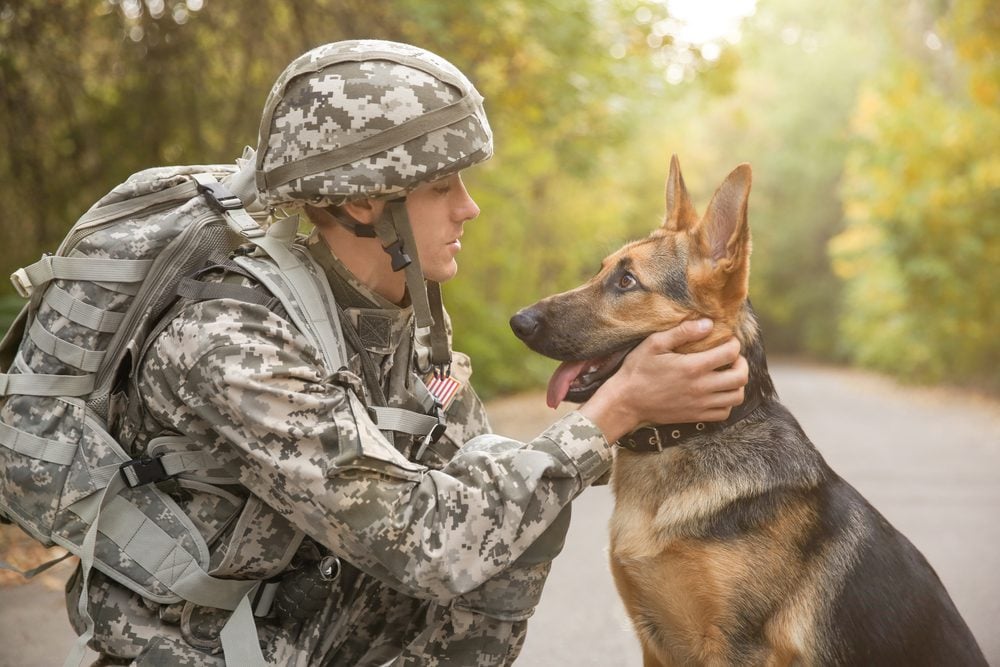
There are a host of charitable organizations that focus on providing service dogs or service dog training for veterans. Many of these organizations provide dogs at low or no cost. There are a number of charitable organizations for veterans that are not accredited by Assistance Dogs International or the International Guide Dog Federation but are still reputable.
Though you wouldn’t be eligible for Veterans Affairs benefits, the money you’d save on the dog could be used for the dog’s care throughout their lifetime. Many of these organizations also offer support throughout the dog’s lifetime. This support is often in the form of continued training, but should you ever have an emergency or struggle with veterinary bills, these organizations are a great place to turn to for help.
Though we can’t possibly list all organizations providing service dogs for veterans, these are a good place to start.
- Big Paws Canine Foundation
- Dog Tag Buddies
- K9 Partners for Patriots
- Maine Paws for Veterans
- Northwest Battle Buddies
- Patriot Assistance Dogs
- PAVE
- Pups4Patriots
- Valor Service Dogs
- Veterans Assistance Dogs of Texas
Consider an Emotional Support Animal
If you cannot get a service dog, an emotional support animal can be a great alternative if you seek mental support. Emotional support animals can provide a lot of comfort to those suffering from mental health ailments. They are also a lot less work than service dogs as they do not require such intense training. In fact, emotional support animals do not even have to be dogs; they can be any animal that is legal to own.
The difference between service dogs and emotional support animals is that ESAs provide comfort through their presence. Their companionship helps people feel less lonely and one’s bond with an animal can be the motivation they need to get out of bed in the morning.
Though emotional support animals are not allowed public access or in airplane cabins like service dogs are, they do have some privileges when it comes to housing. Under the Fair Housing Act, emotional support animals are allowed to live with their owners free of charge even in rentals that do not allow pets.
Service Dogs for Veterans: Get the Support You Deserve
Veterans Affairs provides financial support for veterans with service dogs. This support is only given to those who meet Veterans Affairs’ eligibility requirements. A VA doctor must determine that the veteran is in need of a service dog, and the service dog must be trained by an Assistance Dogs International or International Guide Dog Federation accredited organization.
For those who are unable to receive Veterans Affairs benefits or are unable to work with an accredited trainer, there are some alternatives. It is perfectly legal to train your own service dog, and there are a number of trainers around the United States who are dedicated to helping people train their own service dogs.
There are also many reputable charitable organizations (though not always accredited by Assistance Dogs International) that provide service dogs to veterans at low or no cost. Finally, if a veteran does not qualify for a service dog at all, an emotional support animal can be a good alternative.