Living in Fort Smith means following local pet ordinances, including rules on microchipping and population control. But what if your animal is more than a pet? What if it’s essential for your mental health? Federal and state laws give you specific rights for an emotional support animal (ESA).
To access these protections, you need an ESA letter. This is a prescription from a licensed healthcare provider, issued after a clinical evaluation. The letter provides strong housing protections, letting you bypass pet restrictions, breed bans, or extra fees from landlords.
In this guide, we’ll cover the requirements, the process, and everything you need to know to get an ESA letter in Fort Smith, AR.
Who Can Qualify for an ESA in Fort Smith?
ESA eligibility is based on having a mental or emotional condition that substantially limits one or more major life activities. This can include conditions like anxiety, depression, PTSD, panic disorders, OCD, certain phobias, or bipolar disorder. For a deeper look at qualifying conditions, see our guide on what disabilities qualify for an emotional support animal.
To obtain a legitimate ESA letter, you must be evaluated by a mental health professional licensed in Arkansas. US Service Animals can help connect you with a qualified provider who can assess your needs and issue a valid letter.
What Are the Benefits of Having an ESA Letter in Fort Smith?
Having a legal ESA letter in Fort Smith comes with several important benefits:
- Housing Protection: Landlords managing units that are protected by the Fair Housing Act must make reasonable accommodations, even in apartments with strict no-pet policies.
- Fee Exemptions: You can often avoid pet deposits, breed restrictions, or monthly pet fees, since your ESA isn’t a pet, it’s a prescribed companion.
- Peace of Mind: Your ESA letter provides official documentation that supports your mental health needs.
- University Housing: Students can request ESA accommodations in dorms or on-campus housing.
A valid ESA letter makes it easier to live comfortably with your support animal while navigating Fort Smith’s rental market and local pet rules.
Important Information About ESAs in Fort Smith
Fort Smith follows breed-neutral rules for pets and enforces leash, vaccination, and ID requirements. ESA protections in Arkansas focus on housing, not public access.
- 30-Day Provider Relationship: Must have at least 30 days with a licensed mental health professional before getting a valid ESA letter.
- Housing Rights: Landlords must allow ESAs in “no-pet” units and cannot charge extra fees, unless the animal is disruptive or dangerous.
- Public Access: ESAs do not have ADA protections for businesses or public spaces.
- ESA Letter Requirements: Must include clinician’s license number, contact info, issue date, and be renewed yearly.
Understanding these rules ensures your ESA remains legally recognized while living responsibly in Fort Smith.
Facts About ESAs and Pets in Fort Smith
Fort Smith is known for its pet-friendly atmosphere and growing appreciation for emotional support animals. The city blends small-town warmth with strong community support for mental health and responsible pet ownership.
- Population & Pet Ownership: Home to about 91,000 residents, many families, and retirees rely on pets for comfort and companionship.
- Popular Breeds: Labrador retrievers, German shepherds, and mixed breeds are the city’s favorites.
- Dog Parks: Riley Farm Dog Park, Fort Smith Dog Park, and Ben Geren Park serve as social hubs for pets and owners.
- Events: “Tails & Trails Fest” and local adoption drives promote rescue awareness and emotional wellness.
- Mental Health Support: Around 22% of residents face mental health challenges annually, with several facilities offering therapy and ESA support.
- Local Universities: UA–Fort Smith and Arkansas College of Health Education allow ESA accommodations in campus housing.
Fort Smith’s compassionate culture makes it an ideal city for anyone who depends on their animal for comfort and emotional stability.
How to Get an Emotional Support (ESA) Letter in Fort Smith
In Arkansas, the process for getting an ESA letter is a bit different from most areas. State law requires that a provider must establish a client relationship with you for at least 30 days before issuing documentation for an emotional support dog. This ESA letter gives you the right to live with your animal, even in “no pet” housing, without paying pet fees.
However, a lot of people fall prey to scams that sell noncompliant letters, end up with long waits to find a licensed Arkansas clinician, and state rules (for example, a required provider relationship period) that some online services ignore. These problems often make landlords push back or reject letters.
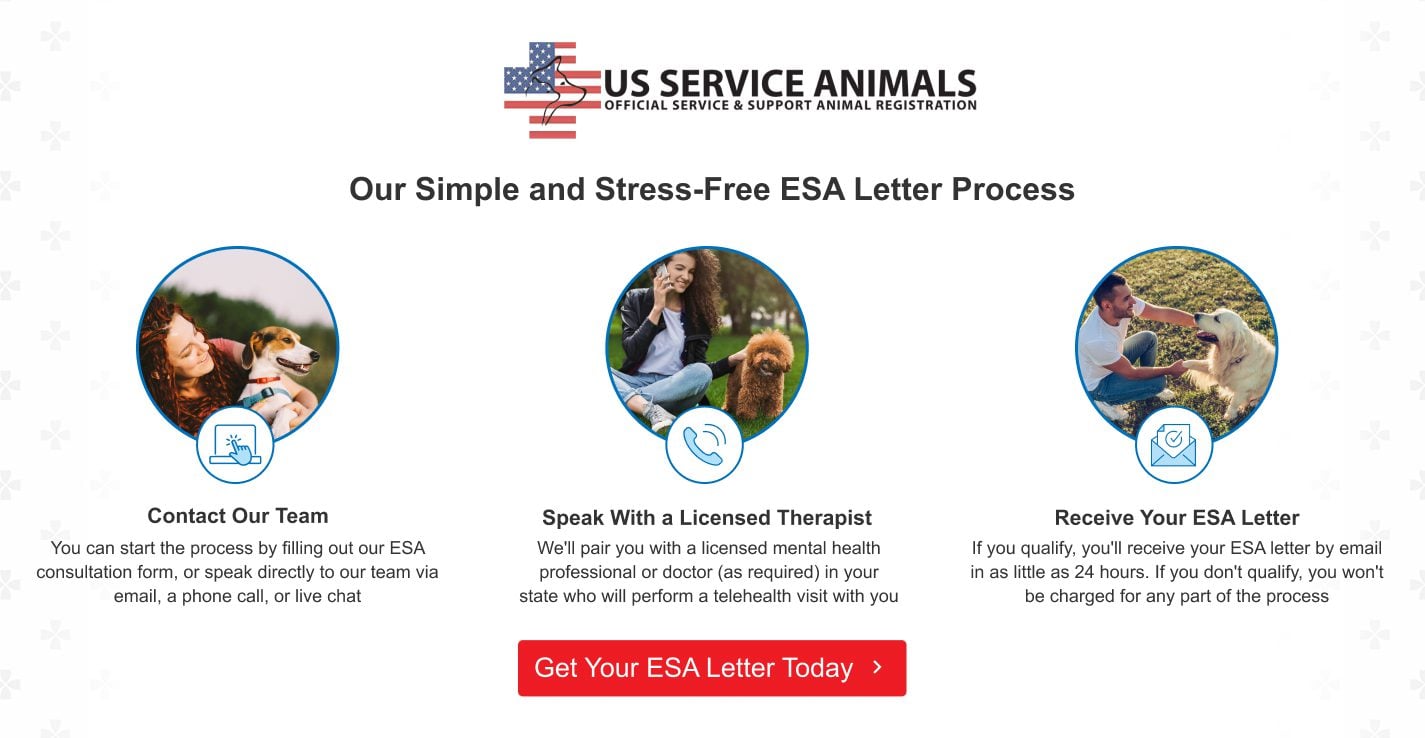
US Service Animals makes the process simple, legitimate, and fully compliant with Arkansas law. Here’s how it works:
- Start With a Short Questionnaire: You’ll answer a few quick questions about your emotional support needs and location.
- Connect With a Licensed Arkansas Clinician: We match you with a licensed professional to establish the required 30-day relationship and conduct your evaluation.
- Receive Your ESA Letter: If approved, you’ll get a valid ESA letter that includes your clinician’s license number and contact information.
This process helps you avoid scams, ensures legal protection for housing, and guarantees that your ESA documentation is recognized across Fort Smith and the rest of Arkansas.
Do I Have to Get an ESA Letter in Fort Smith from a Mental Health Professional In Arkansas?
Yes. Your ESA letter must come from a licensed mental health professional who is authorized to practice in Arkansas for it to be valid in Fort Smith. Also, note that Arkansas law requires a 30-day relationship with your clinician before they can issue an ESA letter.
US Service Animals takes care of this for you by connecting you with a licensed Arkansas-based practitioner who understands state-specific laws and federal Fair Housing Act (FHA) protections. This guarantees your ESA letter will meet all legal standards and hold up if questioned by landlords or housing providers.
Emotional Support Animal Fort Smith Regulations: What Are the Laws About ESAs in Fort Smith?
Emotional support animals in Fort Smith are protected by federal law under the Fair Housing Act, which ensures housing access even in properties with no-pet policies.
While Arkansas does not have additional ESA-specific state laws beyond federal standards, these nationwide protections cover all residents. You can learn more about statewide rules in our full guide to ESA laws in Arkansas.
Airline and Travel ESA Laws in Fort Smith: Can I Fly With an ESA in Fort Smith?
Due to recent changes to the Air Carrier Access Act (ACAA), airlines are no longer required to recognize emotional support animals as service animals. Most carriers now treat ESAs as pets, meaning you must follow the airline’s pet travel policies and pay any associated fees.
ESAs also do not have public access rights on other forms of transportation, like buses, trains, or taxis. However, many airlines and ride services are increasingly pet-friendly, especially for small animals in carriers. If you need a travel companion with broader access rights, consider qualifying for a psychiatric service dog (PSD) instead.
Can I Live Anywhere With an ESA in Fort Smith?
For the most part yes; this is the primary protection for an ESA. The federal Fair Housing Act applies to almost all types of housing, including apartments, rental homes, and condos. This law requires your landlord to provide a “reasonable accommodation” for your assistance animal, as long as the unit is covered by the FHA.
This means that even if a building has a “no pets” policy, your landlord must make an exception for your valid ESA. They also cannot charge you a pet deposit, pet rent, or other pet-related fees. The FHA also bypasses any breed, size, or weight restrictions, so your ESA letter will protect you even if your animal is a breed that the landlord normally bans.
This protection also extends to university housing. Students at local schools like the University of Arkansas – Fort Smith can live with their ESA in the dorms after getting approval from the school’s disability services office.
Can I Bring My ESA to Work With Me in Fort Smith?
Workplaces are not required by law to allow emotional support animals. Unlike service dogs, ESAs do not have public access or employment protections under the Americans with Disabilities Act (ADA).
That said, some Fort Smith employers may make voluntary accommodations if your ESA supports your mental health and does not disrupt the workplace. It’s best to discuss this privately with your HR department or supervisor and provide your ESA letter to support your request.
What Exceptions Are There to ESA Laws in Fort Smith?
Landlords in Fort Smith can deny housing rights for an ESA if the animal is aggressive, destructive, poses a safety threat, or causes major property damage. They can also refuse if accommodating the ESA would create an undue financial or administrative burden. Otherwise, valid ESA letters protect your right to housing under the Fair Housing Act.
Do I Need to Renew My ESA Letter Every Year in Fort Smith?
Yes. ESA letters in Fort Smith must be renewed each year to stay valid for housing protections. US Service Animals will automatically remind you when it’s time to renew and help you reconnect with a licensed Arkansas professional for an updated letter.
Do I Have to Register My ESA in Fort Smith?
You don’t need to register an emotional support animal for it to be legally valid in Fort Smith. There’s no official federal or state ESA registry, and any site claiming registration is required is likely a scam.
However, US Service Animals offers optional registration services if you’d like extra documentation and identification for your ESA. This can make interactions with landlords, property managers, or neighbors smoother. To learn more about verifying your ESA properly, visit our ESA certification page.
Public Access Fort Smith ESA Laws: Where Can You Take Your ESA in Fort Smith?

ESAs only have housing rights under the Fair Housing Act. They do not have public access rights in restaurants, stores, or workplaces. Arkansas Act 819 (formerly HB1893), signed into law on April 17, 2025, allows private businesses and property owners to prohibit ESAs from entering their premises, though housing protections remain in place.
Nonetheless, Fort Smith offers many pet-friendly places, including Riley Farm Dog Park, Ben Geren Park, Creekmore Park, and patios at AJ’s Oyster House and La Huerta.
If you need broader public access, consider getting a psychiatric service dog. They’re covered under the ADA and can accompany you almost anywhere.
How to Get a Psychiatric Service Dog in Fort Smith?
If you qualify for an ESA, you also qualify for a psychiatric service dog, which provides broader access rights under the ADA. PSDs can accompany you in public spaces, workplaces, and almost anywhere an ESA cannot go.
US Service Animals makes obtaining a PSD straightforward:
- Consultation Form: Start by completing the PSD consultation form to connect with a licensed professional.
- Online PSD Course: Take the online course to learn how to train and work with your PSD effectively.
- Approval & Certification: Once approved, you’ll receive guidance and resources to integrate your PSD into daily life.
While dogs are the only animals recognized as service animals, you can still have other pets (like cats and rabbits) as an ESA to provide emotional support alongside your PSD. For more information, visit our psychiatric service dog page.
How to Get an ESA Letter in Other Cities in Arkansas
Get an Emotional Support Animal (ESA) Letter in Fort Smith Today

Emotional support animals can make a meaningful difference for anyone dealing with mental or emotional disabilities, providing comfort, stability, and companionship in daily life. In Fort Smith, an ESA can help you navigate housing challenges, reduce stress, and improve overall well-being.
To get started safely and legally, schedule your risk-free consultation with US Service Animals and connect with a licensed Arkansas mental health professional who can evaluate your needs and issue a valid ESA letter.