

Living in a beautiful place like Juneau comes with many benefits, and for many people, sharing that life with an animal companion makes it even better. An emotional support animal (ESA) can provide comfort and companionship, helping to alleviate symptoms of a mental or emotional disability.
To ensure your animal can live with you, regardless of building pet policies, you’ll need a legitimate ESA letter. This guide will walk you through the process and explain your rights in Juneau, Alaska.
Who Can Qualify for an ESA in Juneau?
To qualify for an ESA in Juneau, you must have a mental or emotional disability diagnosed by a licensed mental health professional (LMHP), and your animal must provide support that helps alleviate symptoms.
Common qualifying conditions include depression, anxiety, PTSD, bipolar disorder, and various phobias. If you need more information on eligible ailments, consider reading our comprehensive guide on what disabilities qualify for an ESA.
It’s important to work with a professional licensed in Alaska, as only they can assess your condition and issue a legitimate ESA letter. If you need assistance, US Service Animals can connect you with a qualified provider
What Are the Benefits of Having an ESA Letter in Juneau?
A legitimate ESA letter in Juneau primarily secures your housing rights under the Fair Housing Act (FHA), allowing you to live with your emotional support animal even in “no pets” buildings. While landlords can set rules on size, breed, or number of animals, an ESA letter serves as a formal request for reasonable accommodation.
Other than securing housing, an ESA letter also provides financial relief. Landlords are prohibited from charging pet-related fees for emotional support animals. This includes pet deposits, pet rent, and application fees.
Important Information About ESAs in Juneau
Alaska does not have a state law that fully defines ESAs; protections are primarily based on the federal Fair Housing Act. Unlike service animals under the ADA, ESAs do not have broad public-access rights.
For housing, Alaska law (via the Disability Law Center of Alaska) prohibits pet deposits or extra fees solely because someone has an ESA. Juneau also has no breed-specific legislation, though landlords may still enforce their own size or breed restrictions, making an ESA letter essential for requesting reasonable accommodation.
Students should note that the University of Alaska allows service and assistance animals (including ESAs) under certain conditions, typically only within student housing, not in other campus buildings.
Facts About ESAs and Pets in Juneau
Juneau is a city that loves its animals, and the bond between people and their pets is a visible part of the community’s fabric. From its parks to its local history, the connection to animal companions is clear.
- Famous Local Dog: Patsy Ann, a deaf bull terrier and the city’s “Official Greeter” in the 1930s, is honored with a bronze statue downtown.
- Off-Leash Areas: Cope Park and Lena Loop Park have fenced dog parks for safe exercise and socialization.
- Mental Health Context: About 14.8% of residents report frequent mental health challenges, highlighting the therapeutic role of pets and ESAs.
- Healthcare Access: High rates of mental illness and limited access to care (71% citing barriers) make supportive animals especially valuable.
- Student Housing: University of Alaska Southeast allows registered support animals in dorms, apartments, and family housing.
- Dog-Friendly Dining: Outdoor areas at Alaskan Crepe Escape, Deckhand Dave’s, and Flying Squirrel Espresso welcome pets.
- Local Events: The Juneau Sled Dog Discovery showcases Alaska’s sled dog heritage, giving visitors hands-on experiences with huskies.
In general, Juneau’s pet-friendly culture and outdoor lifestyle create a supportive environment for both residents and their animal companions.
How to Get an Emotional Support (ESA) Letter in Juneau
To get a valid ESA letter in Juneau, you must consult a licensed mental health professional who can evaluate your condition and determine if an ESA is part of your treatment plan. Once approved, the clinician issues a formal letter on their letterhead, which you can use to request housing accommodations under the Fair Housing Act.
Many people face hurdles at this stage, from difficulty finding a local therapist in areas with limited mental health resources to encountering online scams that sell “instant” ESA letters without a proper evaluation. These issues can lead to delays, rejected letters, or wasted money if the documentation doesn’t meet legal standards.
At US Service Animals, we offer a secure, confidential, and straightforward path to obtaining a legitimate ESA letter, connecting you with qualified professionals licensed to practice in Alaska.
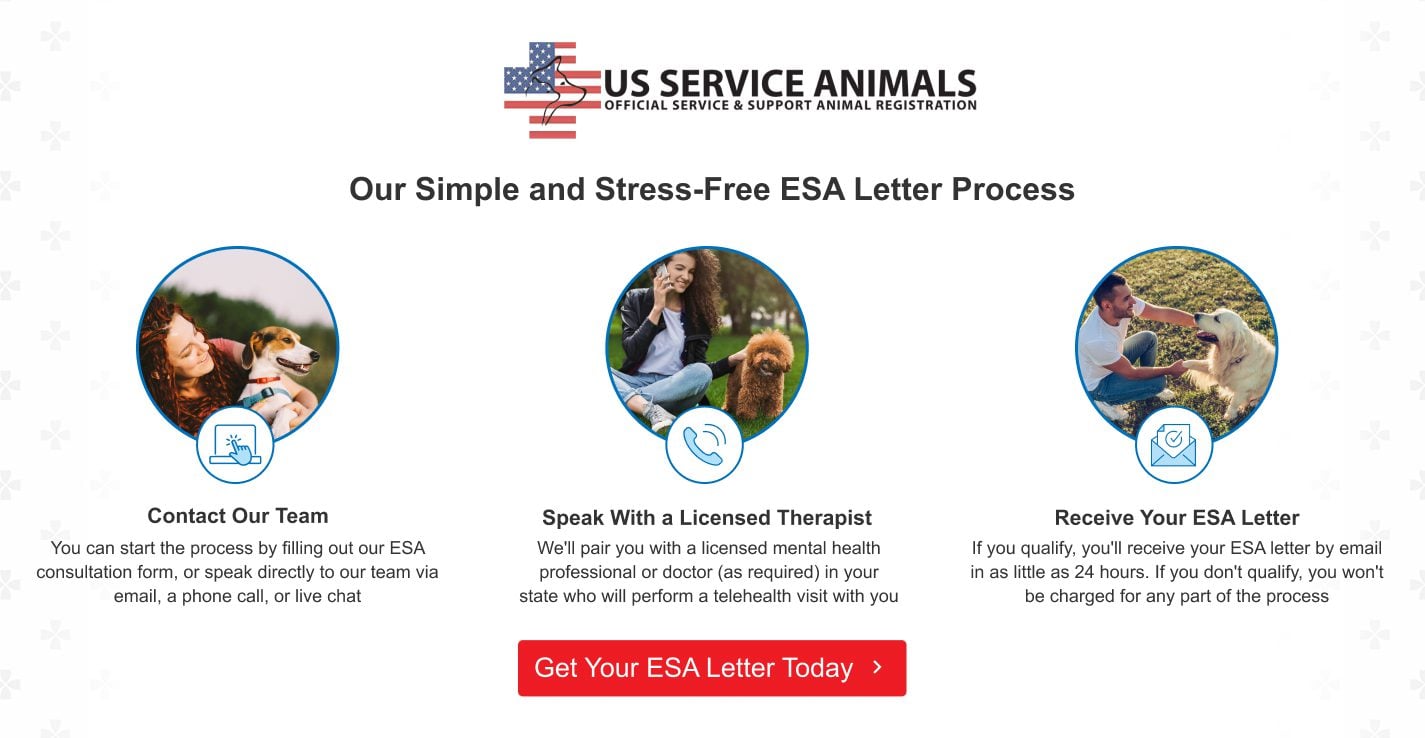
Here is how our process works:
- Complete a Free Online Assessment: A short, confidential screening determines your potential eligibility.
- Connect With a Licensed Professional: We match you with an Alaska-licensed clinician for evaluation.
- Receive Your ESA Letter: If you qualify, you get an official letter on the clinician’s letterhead with all required details.
With the right support, obtaining an ESA letter in Juneau doesn’t have to be stressful. We simplify the process, connect you to licensed professionals, and help you avoid common pitfalls so you can focus on the comfort and benefits your ESA brings.
Do I Have to Get an ESA Letter in Juneau from a Mental Health Professional In Alaska?
Yes, your ESA letter must come from a licensed mental health professional in the state where you live, so, for Juneau residents, that means an Alaska-licensed clinician. Some states also have additional rules, like requiring a 30-day therapeutic relationship or that the letter be issued by a medical doctor.
US Service Animals simplifies this by connecting you with a qualified Alaska-licensed practitioner. This ensures your ESA letter meets both federal and state requirements and won’t be rejected due to licensing or procedural issues.
Emotional Support Animal Juneau Regulations: What Are the Laws About ESAs in Juneau?
Emotional support animals are protected at the federal level, primarily through the Fair Housing Act (FHA). These protections allow individuals with a valid ESA letter to live with their animal, even in housing that typically prohibits pets.
Certain states, including Alaska, may also provide additional legal protections that support ESA owners. You can learn more about specific state protections by reading our detailed guide on ESA laws in Alaska.
Airline and Travel ESA Laws in Juneau: Can I Fly With an ESA in Juneau?
Recent updates to the Air Carrier Access Act (ACAA) mean that airlines are no longer required to allow ESAs in the cabin for free. Most major airlines now classify ESAs as pets, which means standard pet travel fees and carrier requirements apply.
While ESAs do not have public access rights to ride on other forms of public transportation, such as buses or taxis, Juneau does have a variety of pet-friendly travel services, including charter options.
If you need broader travel access, consider whether a psychiatric service dog might be more appropriate, as PSDs have public access rights under the ADA. We cover PSDs in more detail later in this article.
Can I Live Anywhere With an ESA in Juneau?
The Fair Housing Act protects ESA owners in Juneau, allowing them to live with their support animals in apartments, condos, rental homes, and even college dorms, even if pets aren’t typically allowed as long as the unit is covered by the FHA. Landlords almost always must make reasonable accommodations and cannot charge pet fees for legitimate ESAs.
In Juneau, this includes popular rental zones near the University of Alaska Southeast, as well as downtown and residential areas. While Alaska doesn’t have additional state housing protections beyond the FHA, local landlords are still required to follow federal housing guidelines.
Can I Bring My ESA to Work With Me in Juneau?
Unlike service animals, ESAs do not have guaranteed public access or workplace rights under federal law. However, some employers in Juneau may choose to allow ESAs as part of their workplace accommodation policies, especially if you provide a valid ESA letter and demonstrate that your animal offers emotional support related to your disability.
Requests are usually considered on a case-by-case basis, so it’s best to speak directly with your employer or HR department to explore potential accommodations.
What Exceptions Are There to ESA Laws in Juneau?
While ESA laws offer strong housing protections, there are a few important exceptions to keep in mind.
Landlords in Juneau can legally deny housing accommodations if an ESA is aggressive, destructive, or poses a direct threat to the health or safety of others. They may also deny requests if the animal would cause significant property damage or place an undue financial or administrative burden on the housing provider.
Additionally, ESA protections do not apply to animals that are not under the owner’s control or are not properly housebroken. These exceptions ensure that both tenants and property owners are protected under the law.
Do I Need to Renew My ESA Letter Every Year in Juneau?
Yes, ESA letters must be renewed annually to stay valid. Renewal ensures your documentation reflects your current mental health needs and complies with legal requirements.
With US Service Animals, you don’t have to worry about forgetting. We will automatically send you a reminder when your renewal date is approaching, making it easy to keep your ESA letter up to date in Juneau.
Do I Have to Register My ESA in Juneau?
No, ESAs do not need to be registered to be legally valid. There is no official federal or state registry, and any service claiming registration is required is likely a scam.
U.S. Service Animals offers optional registration if you want extra documentation or identification for your ESA, which can help ease landlord concerns or prevent questions from neighbors. You can register your ESA here. For more formal documentation, explore our ESA certification guide to ensure you have everything needed for housing or other accommodations.
Public Access Juneau ESA Laws: Where Can You Take Your ESA in Juneau?

Emotional support animals do not have public access rights under federal law. Their legal protections mostly cover housing, so entry to restaurants, stores, or other public spaces in Juneau is not guaranteed.
That said, Juneau is a pet-friendly city. Many cafes and shops allow well-behaved dogs on patios, and public areas like Sandy Beach, Cope Park, and Mendenhall Glacier Recreation Area are popular for walks. Some stores may allow animals at their discretion, so it’s best to check first.
For broader public access, psychiatric service dogs (PSDs) offer greater protections, as they can accompany handlers in nearly all public places, making them ideal for those needing more comprehensive support.
How to Get a Psychiatric Service Dog in Juneau?
Psychiatric service dogs in Juneau are trained to perform tasks that help manage mental health disabilities, giving them broader public access than ESAs. If you qualify for an ESA, you generally qualify for a PSD as well.
Many people have both a PSD for public access and task support, and an ESA (such as a cat or other companion animal) for comfort at home, especially if the animal cannot legally be a service dog.
US Service Animals makes the process simple: start with our PSD consultation form to determine eligibility, and follow our online PSD course for training and certification guidance. For more information, visit our psychiatric service dog page.
How to Get an ESA Letter in Other Cities in Alaska
Get an Emotional Support Animal (ESA) Letter in Juneau Today

Emotional support animals are ideal for anyone in Juneau dealing with mental or emotional disabilities, such as anxiety, depression, or PTSD. They provide comfort, companionship, and a sense of stability, helping improve daily life and overall well-being.
To get started, you can schedule your risk-free consultation with US Service Animals. Our team will connect you with a licensed professional in Alaska and guide you through the process of obtaining a legitimate ESA letter, so you can enjoy the full benefits your support animal brings.