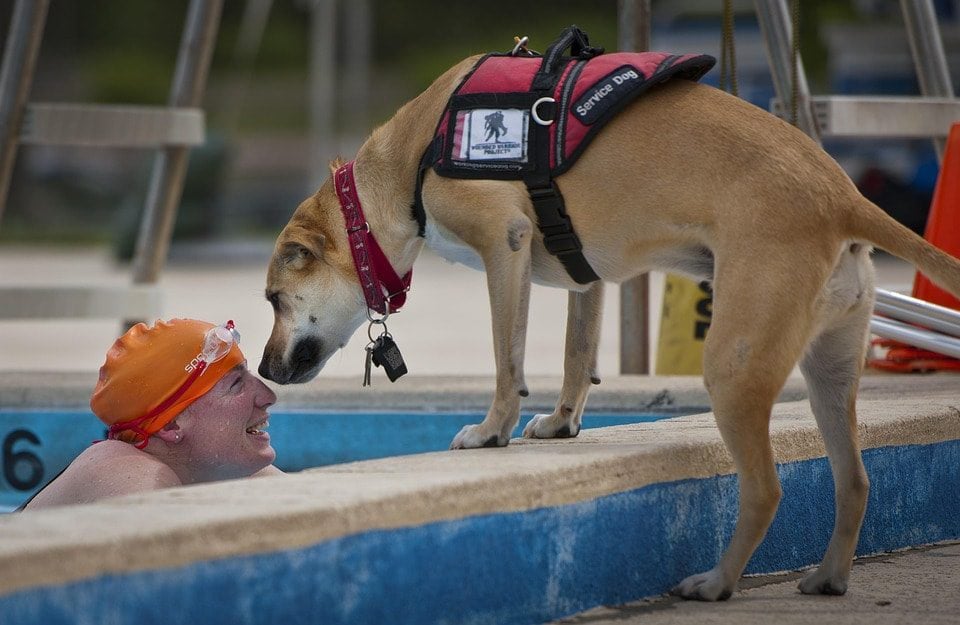
TBI, or traumatic brain injury, is a serious condition. It can be caused by accidents, illnesses, and even infections.
A person who suffers from TBI can have diminished mental capacities, become short-tempered, forgetful, and suffer a number of other serious ailments. That said, TBI is a condition that may qualify for a service dog. Read on to learn more about service dogs for TBH
Understanding TBI (Traumatic Brain Injury)
Mild traumatic brain injury may only affect brain cells for a brief amount of time. However, more serious brain injury can result in bleeding, pressure on the brain, and actual physical damage to the brain that results in long-term, lasting challenges.
Some of the most common symptoms of traumatic brain injuries include:
- Nausea or vomiting
- Headaches
- Dizziness or loss of balance
- Problems with speech
- Loss of coordination
- Inability to wake up from sleep
- Seizures
- Loss of consciousness
- Confusion
Agitation or combativenessWhen a person has been diagnosed with TBI, daily routines become more complicated. Even an individual who has been diagnosed with TBI but is considered ‘high functioning’ with the disability may struggle to get through each day, or even a simple task.
There are numerous treatment options available to those dealing with traumatic brain injury, including direct physical support from another individual, medications, and considerations of the environment surrounding them. A service dog could also be a benefit for someone with TBI to help them cope with those various symptoms, handle the anxiety associated with the condition, and to keep them safe.
Understanding What a Service Dog Is
Service dogs are specifically trained to assist an individual dealing with a specific and documentable health issue. They can support people with physical ailments as well as a mental health challenge, which can include anxiety and TBI.
Many people immediately think of seeing-eye dogs for the blind or police K-9 units. However, service dogs cover a wide range of supports. In fact, there are eight different types of service dogs available, including:
- Guide dogs, which help people with visual impairments
- Hearing dogs that can assist somebody who is hearing impaired or completely deaf
- Diabetic alert dogs
- Mobility assistance dogs
- Seizure response dogs
- Autism support dogs
- Allergy detection dogs
- Psychiatric service dogs support those who are coping with mental health challenges
These are only a few examples of the various service dog options out there.
The Training Service Dogs Receive
In order to become a “service dog,” these animals go through extensive training. There are specific standards that must be met for an animal to become eligible as a service dog. Some of the most common traits include:
A Calm Temperament
A service dog needs to be well-tempered. That means they aren’t going to become stressed very easily, even in difficult environments. These animals should be happy to be pet, but even if someone, like a stranger, approaches and gets a little too aggressive with their affection, the animal isn’t going to react negatively.
Most of the time a calm temperament has to come from birth, though certain attributes can be trained.
A Social Personality
In other words, a service dog needs to be friendly. This is sometimes considered one of the most important attributes as they will provide an emotional boost to their owner, especially during difficult, stressful situations. If the dog is too energetic, though, that can cause harm so that social quality needs to be tempered to some degree.
Adaptive
A therapy dog needs to be able to adapt to different environments. Even if there’s a lot of noise in the background or seeming chaos with crowds of people, that dog needs to have patience and be able to properly support its owner even in uncomfortable environments.
The Cost of Training
Training a service dog can cost anywhere between $30,000 and $40,000. In order to get a service dog, though, there may be certain financial assistance programs you may qualify for if you have a documentable traumatic brain injury.
If you are interested in getting a service dog and qualify for one, there are specific requirements you’ll need to meet first:
- You need to have a documentable physical disability, illness, or disorder
- You will have to be present during at least a part of your dog training
- You need to be able to provide commands to your dog and to care for this animal
- Your home environment needs to be stable
- You need to have adequate financial resources to be able to properly care for your dog
These are only a handful of service dog requirements, and we have a service dog requirement guide that covers additional information.
If you need help training a service dog for TBI, don’t worry, because at US Service Animals we offer online programs that can help.
How Does a Service Dog Assist Someone with TBI?
As mentioned, there can be a wide range of symptoms associated with TBI. Even a person with mild traumatic brain injury, somebody who can function throughout the day without direct support and assistance of another adult, may benefit from a service dog.
These animals can help provide a calming presence during stressful situations. They can offer reminders about when it’s time to take their prescription medications.
Certain dogs, as noted earlier, may even be able to detect when a seizure is starting, thus helping their owner get to a safe place and even support him or her throughout the seizure, and then remain with them or go out and get help as they are trained to do.
Does Everyone with TBI Qualify for a Service Dog?
You will need to speak with your physician first and discuss the prospect of getting a service dog to help you with the symptoms associated with this traumatic brain injury. Even if your doctor doesn’t recommend a service dog, you may still be eligible to receive an emotional support animal.
If you are dealing with the effects of a traumatic brain injury, you are likely dealing with mental health challenges as well as physical. These can include depression, anxiety, and even memory-related challenges.
An ESA (emotional support animal) may not necessarily be a dog, but properly registered and certified, you will be able to have this companion with you as you go to work or even in your living environment that may not otherwise permit animals.
If you are denied a service dog or your doctor does not recommend this, consider an emotional support animal. While these ESAs don’t go through the same intensive training as a registered service dog, they still provide valuable support and emotional comfort for those dealing with the effects of TBI.
How to Get a Service Dog for TBI
If you recognize the value of a service dog for your traumatic brain injury, you may be eligible to receive this type of assistance. There are amazing benefits that come from having a service dog when you’re dealing with traumatic brain injuries.
If you want to live more independently and have confidence that you can handle certain situations that are directly the result of this TBI, then a service dog or emotional support animal could be exactly what you need.
These animals can provide a variety of support and perform certain critical tasks, including alerting you of a potential seizure or seeking assistance in the event you have a medical emergency resulting from this TBI.
If you and your primary medical physician agree that a service dog or emotional support animal would be a benefit to you, that’s where we can help. Our experts at US Service Animals understand exactly how beneficial a service dog or ESA can be to somebody with a traumatic brain injury.
We can help you navigate obtaining your own ESA or service dog and answer any questions you have along the way. Contact us directly so we can help you get started in this process.
FAQs About Service Dogs for TBI
If you have more questions about service dogs for TBI, don’t worry, because we have your back. We answer the most common questions below.
Can You Get a Service Dog for TBI?
Yes, you can get a service dog for TBI. Since TBI qualifies for a service dog, you shouldn’t have any issues obtaining one. However, you’ll need TBI that qualifies for disability before you can qualify for a service dog. Therefore, make sure you consult with a licensed medical professional first.
Does TBI Count as a Disability?
Yes, TBI is a disability. If it impairs your ability to work or perform, you’ll find that you’ll qualify for disability. Therefore, TBI qualifies for service dog work.
What Diagnosis Qualifies for a Service Dog?
A diagnosis from a medical doctor, either a primary care physician, licensed mental health professional, or a specialist is required for a service dog. Without one, you’ll find that you can’t qualify for a service dog. We have a comprehensive guide that covers all of the disabilities that qualify for a service dog.
How Expensive Is a Seizure Alert Dog?
An epilepsy service dog cost, or a seizure alert dog, can cost around $30,000 to $40,000 (on average). The high cost is based on the number of hours required to train these service animals. This is because the canines need to be trained and able to handle impending seizures.