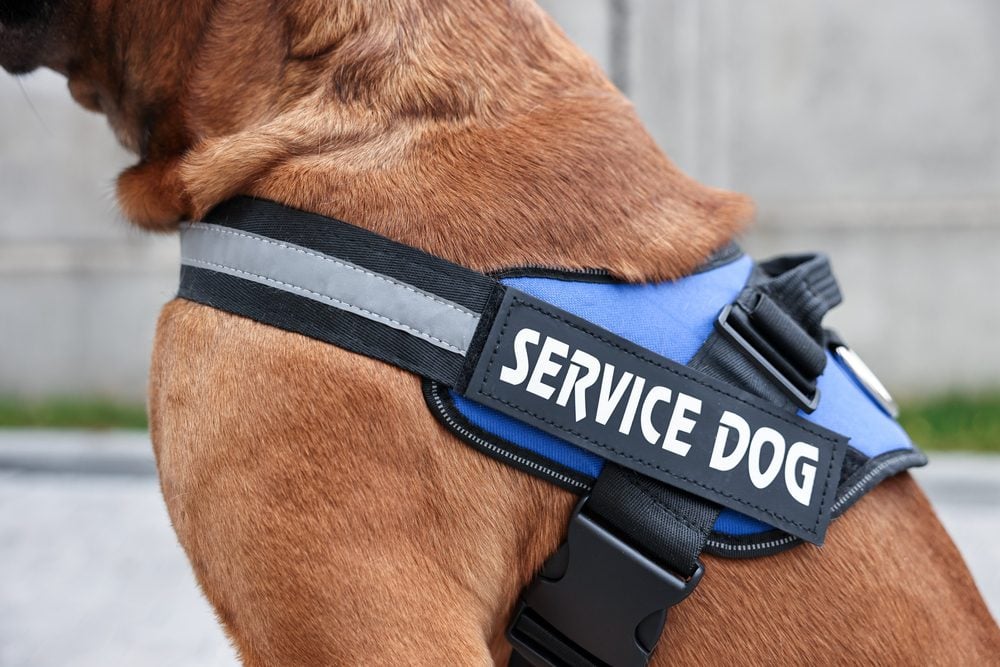
Psychiatric service dogs, or PSDs, are one of the most common types of service dogs. These dogs assist their handlers with a psychiatric disability by performing tasks to ease their symptoms and help them in their day-to-day lives.
With everything they can do for the handler, psychiatric service dogs are an irreplaceable asset for countless people with psychiatric disabilities. For those interested, some of the common tasks these dogs perform to benefit their handler include tactile stimulation, preventing harmful behaviors, getting the handler out of a panic attack, and positioning their body to create distance between strangers.
However, having a psychiatric service dog isn’t as easy as putting a service dog harness on a dog and calling it a day. There are certain things individuals with a mental disability must first do in order to have their dog officially recognized as a service dog.
In this article, we will cover what service dogs need, including answering questions about psychiatric service dog certification, which many wonder whether they need for their animals. Continue reading to find out everything you need to have for a dog to be recognized as your service dog.
What Is a Psychiatric Service Dog?
A psychiatric service dog is a type of service animal. They are the same as any other service dog, with the specialization that they assist those struggling with a psychiatric disability. Although these service dogs can assist anyone with a mental disability, they are more common among people who are suffering from anxiety disorders, panic disorders, dissociation, and post-traumatic stress disorder.
Psychiatric Service Dog and Emotional Support Dog Differences
Since emotional support dogs are also only for people with psychiatric disabilities, many confuse them with service dogs. While both are there to make life easier for their owners, emotional support dogs and service dogs are different.
Emotional support dogs provide therapeutic benefits through companionship without any training, whereas service dogs must be trained and perform a disability-related task. The laws that grant protection to these animals are also different; only the Fair Housing Act protects emotional support dogs, while service dogs have broader rights.
For example, psychiatric service dogs can accompany their handlers in spaces that serve the general public, like restaurants and government buildings, whether there’s a no-pet policy or not. Service dogs are exempt from any no-pet policy, unless the presence of the animal would cause a health or safety risk.
Emotional support dogs, on the other hand, don’t have the same protections and are treated as pets in public situations.
Another main difference between emotional support dogs and psychiatric service dogs is that, like all ESAs, emotional support dogs must have a valid ESA letter written by a licensed mental health professional. Service dogs simply don’t have any paperwork or other certification requirements, which we cover in detail below.
Psychiatric Service Dog Certification Requirements
Among the many requirements for psychiatric service dogs, specific certifications, registration papers, or graduation documents aren’t a part of it. Psychiatric service dogs don’t need any certification or other forms of paperwork, which means that businesses and other establishments cannot ask for anything of this nature from a service dog handler as proof of their animal’s status.
Under the Americans with Disabilities Act, businesses can only ask the following two questions to determine whether a dog is a service animal, regardless of type.
- Is the dog a service animal required because of a disability?
- What work or task has the dog been trained to perform?
Besides these two questions, businesses and other establishments cannot ask the PSD handler to present documentation for their animal or ask the dog to demonstrate a task it is trained for.
With all this, under no obligation, psychiatric service dog handlers are required to produce any documentation or certification. A PSD handler will have everything they need as long as their dog has received training and can perform a disability-related task.
Other Psychiatric Service Dog Laws
While the above provides an overview of the psychiatric service dog requirements, they enjoy protections in addition to the public access rights given to them by the Americans with Disabilities Act. Here’s more information about additional laws that grant protections to psychiatric service dogs and other types of service animals.
The Fair Housing Act
The Fair Housing Act is a federal law that protects individuals from housing discrimination based on race, religion, sex, familial status, and disability. Since psychiatric service dogs are needed as part of a disability, this means that landlords cannot discriminate against someone or deny housing because they have a service animal.
Due to this, psychiatric service dogs are treated differently from pets. These animals are not subject to no-pet policies, including when applying for housing and after the handler moves into their new place. In fact, tenants aren’t required to disclose that they have a psychiatric service dog when applying for housing. Additionally, landlords cannot charge pet fees, deposits, or rents for PSDs.
If you have a psychiatric service dog and your rental agreement or lease has a no-pet clause, simply request accommodation for your psychiatric service dog. Unless there’s a legitimate reason, which would be generally the same as reasons landlords can deny an ESA, the landlord must accommodate the psychiatric service dog by waiving the no-pet clause.
Given that many landlords are generally suspicious of service animal claims, if you have a psychiatric service dog certification, this can be a good opportunity to use it. While it’s not necessary to have certification, it may help reinforce your rights.
The Air Carrier Access Act
The Air Carrier Access Act allows service animals, including psychiatric service dogs, to fly with their handlers in the passenger cabin without being subjected to pet travel restrictions. Just like handling other psychiatric service dog needs, handlers aren’t required to produce any certification document for their animal to fly in the passenger cabin for free without pet travel restrictions.
However, you can’t just take your psychiatric service dog on a flight without notifying the airline beforehand. Airlines can require service dog handlers to complete a DOT Service Animal Air Transportation Form attesting to the dog’s training, health, and behavior. If the flight is longer than eight hours, the airline can also require the handler to complete a relief attestation form.
Benefits of Psychiatric Service Dog Certification
Psychiatric service dog certification isn’t a requirement for a dog to be a service animal. They don’t need any certification or registration on top of the training they receive to get the legal protections we’ve covered above.
However, it can be a good way for handlers to reinforce their rights. PSD certification is particularly helpful in situations where the handlers find themselves in need to prove their animal’s status, which happens very often, especially in housing and public situations. Plus, you can get more in addition to the psychiatric service dog certification, depending on where you get the certification from.
For example, at US Service Animals, we provide an Animal ID Card and a unique registration number in addition to the certification for registered service dogs. Handlers can use the Animal ID Card to have identification for their animal and give the registration number for anyone to later search on our website to confirm their status as a psychiatric service dog.
Therefore, psychiatric service dog certification can have added benefits like avoiding questions and having something concrete to prove the dog’s status as a psychiatric service dog.
Wrapping Up Psychiatric Service Dog Certification Requirements
The only requirement for a dog to be a psychiatric service dog under the Americans with Disabilities Act is training. Any dog, regardless of breed, size, or age, trained to perform a disability-related task has what it takes to be a psychiatric service dog.
This task can be tactile stimulation, deep pressure therapy, reminding the handler to take medication, guiding the handler to a safe space, or any other task that relates to the handler’s disability. As long as the dog can execute a disability-related task, they won’t need any psychiatric service dog certification or other forms of paperwork to gain legal recognition.