
Pennsylvania not only is subject to federal discrimination protections laws but also has its own state laws. ESA Pennsylvania rules follow federal law, mainly the Fair Housing Act and the Pennsylvania Human Relations Act. This means your protections come from federal housing guidelines and state-specific ones.
Understanding your rights is pivotal to using them properly and making sure you stay on the right side of the law. The key step is getting a valid ESA letter from a licensed mental health professional who is allowed to practice in Pennsylvania. Without that letter, housing providers do not have to treat your animal as an ESA.
This guide explains how ESA Pennsylvania laws operate under federal rules, what an ESA letter must include, and how the housing process usually works. It sets you up with the essentials so your request is clear, valid, and easy for a landlord to process.
Pennsylvania ESA Laws: Summary of Legal Protections
Pennsylvania emotional support animal laws follow the federal framework, mainly the Fair Housing Act. It requires housing providers to consider reasonable accommodation requests for ESAs and prevents extra pet fees for qualified tenants. The Pennsylvania Human Relations Act reinforces these by prohibiting housing discrimination against individuals with disabilities.
The sections below break down how these laws work in day-to-day situations. You’ll see how ESA housing rights function, what documentation is required, how landlords must respond, and how ESAs differ from service animals. Together, these details outline the core of Pennsylvania emotional support animal laws and help you understand what protections you can rely on.
Emotional Support Animal Pennsylvania Regulations: ESA Laws in Pennsylvania
ESA laws in Pennsylvania primarily align with federal legislation, ensuring that individuals with a legitimate need for emotional support animals can live with their animals and receive accommodations, especially in housing. Below is a breakdown of key regulatory areas under Pennsylvania ESA laws.
Pennsylvania ESA Housing Laws
Pennsylvania emotional support animal rules in housing come directly from the Fair Housing Act, and are further continued by the Pennsylvania Human Relations Act (PHRA)that recognizes emotional support animals as “assistance animals” with protections akin to the federal FHA ESA protections. Confusingly, the PHRA refers to service dogs as support animals, but despite the differences in name, the rights imbued are the same. Landlords must consider valid ESA accommodation requests, cannot charge pet fees, and cannot apply breed or weight limits. The Pennsylvania Human Relations Act also prohibits disability-based housing discrimination, which reinforces these federal protections.
To qualify, tenants must present a legitimate ESA letter from a licensed mental health professional who is permitted to practice in the state. Landlords may verify the letter but cannot ask for medical records or details about the person’s diagnosis.
Pennsylvania ESA Employment Laws
There are no employment protections for ESAs under Pennsylvania law. Emotional support animals are not covered by the ADA, so employers do not have to allow them in workplaces. The only exception is when an employer voluntarily chooses to make an accommodation, but this is optional and not a legal requirement.
Employees who need workplace support must rely on other disability accommodation options, not ESA-specific protections. Only service animals have potential access rights in employment settings.
Pennsylvania ESA Travel Laws
Pennsylvania emotional support animal laws do not grant ESAs any special public access rights while traveling. ESAs are treated the same as pets in public spaces, meaning businesses, hotels, rideshares, taxis, and other establishments can allow or deny them at their discretion.
However, housing accommodations during long-term stays still fall under the Fair Housing Act. If someone is renting a home or apartment for travel or temporary relocation, ESA protections may apply.
Pennsylvania ESA Travel and Flying Laws
Federal aviation rules changed in 2021, and airlines no longer have to recognize emotional support animals as assistance animals. ESAs are now treated as pets by all major airlines, including carriers operating in Pennsylvania.
Passengers must follow each airline’s pet policies, which may include carrier requirements, size limits, fees, and advance reservations. Only trained service dogs qualify for ADA flying protections.
How to Get an ESA Letter in Pennsylvania: ESA Letter Pennsylvania Requirements
Getting a valid emotional support animal letter Pennsylvania residents can rely on starts with meeting federal criteria for an ESA. The process is straightforward. You must work with a licensed mental health professional who is legally allowed to practice in Pennsylvania, because housing providers can reject letters from providers outside the state.
A Pennsylvania ESA letter must confirm two things: that you have a qualifying mental or emotional disability, and that your ESA helps alleviate at least one symptom of that condition. It does not need to list your diagnosis or personal medical history. Your provider only needs to include their licensing details and a clear statement supporting your need for the animal.
Here’s what the process typically looks like when getting an ESA letter through US Service Animals:
- Complete a short intake describing the symptoms you’re experiencing.
- Meet with a licensed Pennsylvania mental health professional.
- Receive a compliant ESA letter if you qualify.
- Download and use your letter for housing accommodation requests.
We walk you through each step, so your paperwork is accurate and easy for landlords to verify. For a more detailed explanation of the process, you can review this guide on how to get an ESA
Do You Need an ESA Letter in Pennsylvania?
Yes. You need a valid ESA letter if you want your animal to be legally recognized in Pennsylvania and receive protected housing rights. Without an ESA letter from a licensed mental health professional who can practice in the state, your animal is considered a pet, and landlords do not have to allow it, waive pet fees, or make any accommodations.
Keep in mind that the Pennsylvania Assistance and Service Animal Integrity Act can be used to penalize pets misrepresented as ESAs, so you’ll want to be sure your ESA letter is legally valid.
Who Can Write an ESA Letter in Pennsylvania?
A valid ESA letter in Pennsylvania must come from a licensed mental health professional who is legally allowed to practice in the state. This can include psychologists, psychiatrists, licensed clinical social workers, licensed professional counselors, and therapists with active Pennsylvania credentials.
The state does not require a 30-day treatment relationship or limit ESA letters to medical doctors, but the provider must be fully licensed and operating within their professional scope.
Online services are acceptable, too, as long as the evaluating clinician holds a Pennsylvania license.
ESA Pennsylvania Registration: ESA Certification in Pennsylvania
Registration with a private ESA organization is not a state or federal requirement in Pennsylvania, and it does not replace the ESA letter required for housing protections. Many people choose to complete an ESA certification after they already have a valid letter because it can offer simple, organized proof that they worked with a legitimate provider
However, it grants no additional legal rights, and landlords cannot require it. The ESA letter from a licensed Pennsylvania mental health professional is the only document that gives you federal housing protections.
Get an ESA Letter in Cities Across Pennsylvania
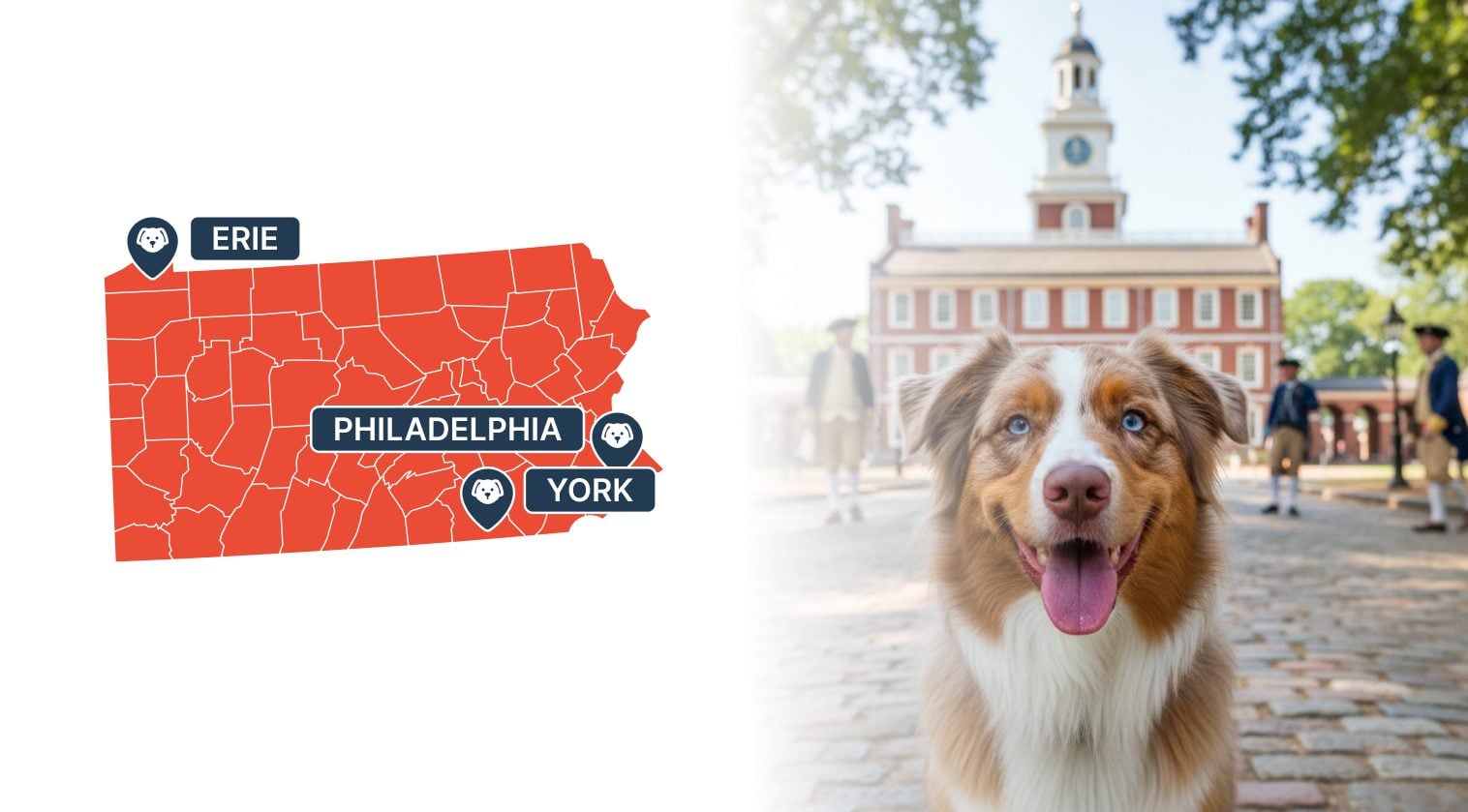
Below, we overview ESA laws in the most popular cities in Pennsylvania; to find out more, including how to get a legally valid ESA letter in these cities, click on the linked heading for the city you’re curious about.
ESA Laws in Philadelphia
Philadelphia follows the same federal ESA housing rules as the rest of Pennsylvania, so a valid ESA letter is required for any accommodation request. The city has a large rental market, which means tenants often deal with strict pet policies, but housing providers must still consider ESA requests under the Fair Housing Act.
Residents also have many pet-friendly cafés and riverfront parks where animals are welcome, although public access is optional and not guaranteed for ESAs. Check our guide on how to get an ESA letter in Philadelphia for more details.
ESA Laws in Pittsburgh
Pittsburgh landlords must follow Fair Housing Act rules and may not charge pet fees for tenants with proper ESA documentation. Many apartment buildings in the city center have pet restrictions, but those do not apply to emotional support animals once your ESA request is approved.
ESAs do not have public access rights, though Pittsburgh’s pet-friendly businesses, including markets and outdoor breweries, often allow them voluntarily. More details about the legal landscape for ESAs letters in Pittsburgh can be found in dedicated city resources.
ESA Laws in Allentown
Allentown renters need a valid ESA letter to gain legal housing protections. Landlords must review accommodation requests fairly, even in older row-home rentals or newer apartment complexes with strict pet policies.
While ESAs cannot enter public spaces automatically, many Allentown parks and outdoor eateries welcome well-behaved pets at their discretion.
ESA Laws in Erie
Erie, with a population of around 92,000, provides various pet-friendly amenities and resources for ESA owners, including guidance on obtaining valid ESA letters for housing rights. The city follows the same federal guidelines for ESAs that are applicable throughout Pennsylvania.
With a valid ESA letter in Erie, you can request reasonable accommodations without paying pet rent or fees. However, public access for your pet is generally limited. Regardless, Erie’s waterfront promenades, outdoor cafés, and dog-friendly shops often welcome pets by choice.
ESA Laws in Reading
Reading’s ESA rules mirror federal housing law, meaning no pet fees or pet restrictions once you present a compliant ESA letter. Because the city has a mix of historic rentals and modern housing developments, requirements can vary by landlord, but legal obligations remain the same.
ESAs do not receive public access rights, though some local businesses, parks, eateries, and outdoor shops are pet-friendly.
ESA Laws in Other Pennsylvania Cities
No matter where you live, be it Harrisburg, Lancaster, Scranton, Bethlehem, or any smaller community, ESA rules remain the same across Pennsylvania. A valid ESA letter from a licensed Pennsylvania mental health professional is required for housing protections, and ESAs do not have public access rights outside of pet-friendly locations.
ESAs vs. Psychiatric Service Dogs in Pennsylvania
Emotional support animals and psychiatric service dogs (PSDs) serve different roles under Pennsylvania and federal law. ESAs provide comfort that helps reduce symptoms of a mental or emotional disability, but they do not have public access rights. Their only legal protection is in housing, where a valid ESA letter prevents pet fees and restrictions.
Psychiatric service dogs, on the other hand, are trained to perform specific tasks such as interrupting panic attacks, grounding during dissociation, or reminding handlers to take medication. Because they are trained working animals, PSDs are fully protected under the ADA and can accompany their handler in public spaces, businesses, and on flights.
If you need a dog that can access public places or perform trained tasks, a PSD may be the right fit. If you only need housing protection and emotional support, an ESA is typically enough. If you need a trained dog with more legal rights, check out our guide on service dog training in Pennsylvania.
How to Get a Psychiatric Service Dog in Pennsylvania
To get a psychiatric service dog in Pennsylvania, you must have a qualifying mental health disability and need a dog trained to perform specific tasks that help manage your symptoms. Unlike ESAs, PSDs require task-based training, not just comfort or support.
We offer a comprehensive online PSD training course that teaches task training, public access skills, and handler-dog communication. If you’re unsure where to begin, you can schedule a consultation through our PSD training consultation form.
Once trained, your dog is recognized as a PSD under the ADA and has full public access rights throughout Pennsylvania with no state-level registration required.

FAQs About Pennsylvania Emotional Support Animal Laws
Below are quick answers to common questions about ESAs in Pennsylvania, with a focus on housing rules, documentation, and how ESAs are treated across different cities in the state.
Does Pennsylvania Recognize Emotional Support Animals?
Yes. Pennsylvania recognizes emotional support animals through federal housing laws, so ESAs are protected in cities like Philadelphia, Pittsburgh, Allentown, Reading, and Erie as long as you have a valid ESA letter.
Who Can Write an ESA Letter in Pennsylvania?
Only licensed mental health professionals who can legally practice in Pennsylvania may write ESA letters for residents, whether they live in large cities or smaller towns.
How Fast Can I Get an ESA Letter in Pennsylvania?
Many Pennsylvania residents can receive an ESA letter within a few days, depending on how quickly the licensed provider completes the evaluation.
Are Online Consultations for ESA Letters Legal In Pennsylvania?
Yes. Online evaluations are allowed as long as the clinician is licensed in Pennsylvania and provides a legitimate assessment.
Can a Landlord Deny an ESA Letter in Pennsylvania?
A landlord in Pennsylvania can only deny an ESA request if the letter is invalid, the animal poses a safety risk, or the request creates an unreasonable burden. Otherwise, they must comply.
Can A Landlord Charge a Pet Deposit for an Emotional Support Animal In Pennsylvania?
No. Pet deposits and monthly pet fees cannot be charged for ESAs anywhere in Pennsylvania once the ESA letter is verified.
Can I Bring My ESA to Work in Pennsylvania?
No. Workplaces in Pennsylvania are not required to accept ESAs, since ESAs do not have ADA public access rights.
Are Emotional Support Animals Allowed in Hotels in Pennsylvania?
Hotels in Pennsylvania are not required to allow ESAs, since temporary lodging is not covered by the Fair Housing Act. Policies vary by hotel and city.