

Understanding emotional support animal rights in Indiana has become particularly important as more residents seek the stability and comfort these animals provide when dealing with mental and emotional disabilities.
All states, including Indiana, are bound by federal ESA protections; each state can have additional local rules, administrative requirements, and enforcement standards. Individuals seeking legal protections must be well-versed in both federal and state laws to leverage them in housing, employment, and travel.
This article takes a comprehensive look at Indiana’s rules, explains the legal backbone that shapes ESA Indiana protections, and walks you through what’s required to get an ESA letter in Indiana that landlords and institutions must accept. In the sections below, we explore ESA Indiana rules through the lens of housing, employment, travel, and certification.
Indiana ESA Laws: Summary of Legal Protections
Indiana emotional support animal laws operate at the intersection of state-level and federal norms. While federal legislation, primarily the Fair Housing Act (FHA) and Air Carrier Access Act (ACAA), serves as the foundation of ESA rights across the country, Indiana’s implementation and enforcement of these standards shape how Hoosiers experience ESA protections.
The following sections break down how Indiana aligns with federal mandates and how the state interprets its responsibilities under these laws. It also highlights what residents can expect when asserting their rights regarding housing, employment, or travel with an emotional support animal.
Emotional Support Animal Indiana Regulations: ESA Laws in Indiana
Indiana follows federal rules regarding emotional support animals, with additional state-level expectations in certain settings. Below are the core categories where ESA Indiana laws apply.
Indiana ESA Housing Laws
Under the FHA, landlords must make reasonable accommodations for tenants with emotional support animals, making housing protections the strongest and most consistent area of ESA Indiana rights. The requirement applies to all residential areas, including those with strict no-pet policies and places where pets normally incur monthly fees or deposits.
Landlords may request a legitimate ESA letter written by a licensed mental health professional, but are prohibited from inquiring about detailed medical history, charging pet deposits, or imposing breed and weight restrictions that would otherwise apply to other pets. They can only deny an ESA if the animal poses a direct safety threat or would cause substantial property damage, conditions that must be supported by clear evidence, not assumptions.
Indiana ESA Employment Laws
The Americans with Disabilities Act (ADA) does not grant ESAs the same workplace access that service animals receive. This effectively means that Indiana employers are not required to accommodate emotional support animals, but may choose to do so as part of voluntary workplace accommodation policies.
Employees may request an ESA through internal HR accommodation channels in organizations that have adopted more flexible practices. Employers in Indiana retain broad discretion regarding emotional support animals in the workplace
Indiana ESA Travel Laws
Travel rules for ESAs vary significantly depending on the mode of transportation. Within Indiana, buses, intercity trains, and public transit systems do not classify ESAs as service animals. This means emotional support animals are typically treated as pets, and animal policies vary by company. On Greyhound buses, most taxi services, and Amtrak routes traveling through Indiana, ESAs must comply with standard pet requirements.
Indiana ESA Travel and Flying Laws
Since the 2021 update to the Air Carrier Access Act, airlines are no longer mandated to recognize emotional support animals as service animals. Indiana residents with ESAs flying out of Indianapolis International Airport or South Bend International Airport will have the ESA treated as a pet and meet the airline’s pet policies. Airlines may impose size and carrier restrictions, with an additional pet fee for ESAs.
How to Get an ESA Letter in Indiana: ESA Letter Indiana Requirements
The single most important step for Indiana residents seeking to secure their rights under the FHA is obtaining a valid ESA letter. An emotional support animal letter Indiana that landlords recognize and consider valid must be issued by a licensed mental health professional. The letter must clearly state that the individual qualifies to own an ESA that would help alleviate symptoms of their disability.
A legitimate Indiana ESA letter must include:
- The mental health professional’s license information
- Confirmation that the patient meets disability criteria
- A statement explaining why an ESA helps alleviate symptoms
- The professional’s signature and contact details
This letter becomes your primary legal tool when presenting your ESA accommodation request to a landlord or housing authority. For a more detailed understanding of how to get an ESA letter, visit US Service Animals’ blog.
Do You Need an ESA Letter in Indiana?
Yes. In Indiana, an ESA letter is absolutely required if you wish to have a legally recognized emotional support animal with full federal housing protections. Without one, a landlord may treat your animal as a standard pet and enforce pet fees, pet restrictions, or outright denial.
An ESA letter Indiana residents can rely on is the only legally valid alternative to traditional pet rules. Anyone hoping to access FHA rights, such as no-pet housing exceptions, exemption from pet deposits, and protection from discriminatory housing practices, must provide this formal documentation.
Emotional Support Animal Letter Indiana Process: Getting a Legally Valid ESA Letter
To secure a valid ESA letter, Indiana residents must complete the following steps:
- Speak to a licensed mental health professional: In Indiana, a licensed mental health professional can include psychologists, psychiatrists, licensed clinical social workers, therapists, or mental health nurse practitioners.
- Receive a diagnosis that qualifies under the FHA: Common conditions include PTSD, depression, panic disorder, generalized anxiety, OCD, and certain eating disorders. The diagnosis must be legitimate, and the clinician must confirm that the ESA alleviates one or more of the symptoms.
- Have your LMHP write the prescription letter: The ESA letter must state your qualifying condition (without revealing sensitive details) and explain your need for an emotional support animal. It must include the provider’s licensing information and signature.
- Share your ESA letter with your landlord or housing provider: Indiana landlords must accept valid ESA letters unless the animal causes substantial disruption, poses a threat, or violates local health and safety rules. Employers are not required to accept ESA letters, but you may voluntarily share one if your workplace offers ESA accommodations.
If you require more clarity on an Indiana ESA letter, visit the US Service Animals guide on how to get an ESA letter.
Who Can Write an ESA Letter in Indiana?
In Indiana, any licensed mental health professional who is authorized to practice in the state can write an ESA prescription letter. This includes psychologists, psychiatrists, therapists, and licensed clinical social workers. In Indiana, professionals are not required to be MDs; psychiatrists can also provide ESA letters.
Many clinicians, especially those practicing via telehealth, may need to maintain a provider-patient relationship for at least 30 days before issuing a recommendation for an ESA. This is not mandated by Indiana law but may be part of licensing board guidelines or company policies.
ESA Indiana Registration: ESA Certification in Indiana
ESA registration or ESA certification is optional in Indiana and not legally recognized as a substitute for an ESA letter. Federal law does not require registration, nor does it grant additional protections.
That said, some Indiana residents choose to register their ESA as an added convenience. Certification can help demonstrate to landlords or skeptical housing staff that you worked with a legitimate provider. Regardless, this should only be acquired after securing a proper ESA letter. Registration alone does not provide legal rights.
Get an ESA Letter in Cities Across Indiana
Residents across the state, from Indianapolis to rural communities, can qualify for an ESA. We maintain city-specific guides on how to obtain ESA documentation, navigate local housing markets, and understand regional rules.
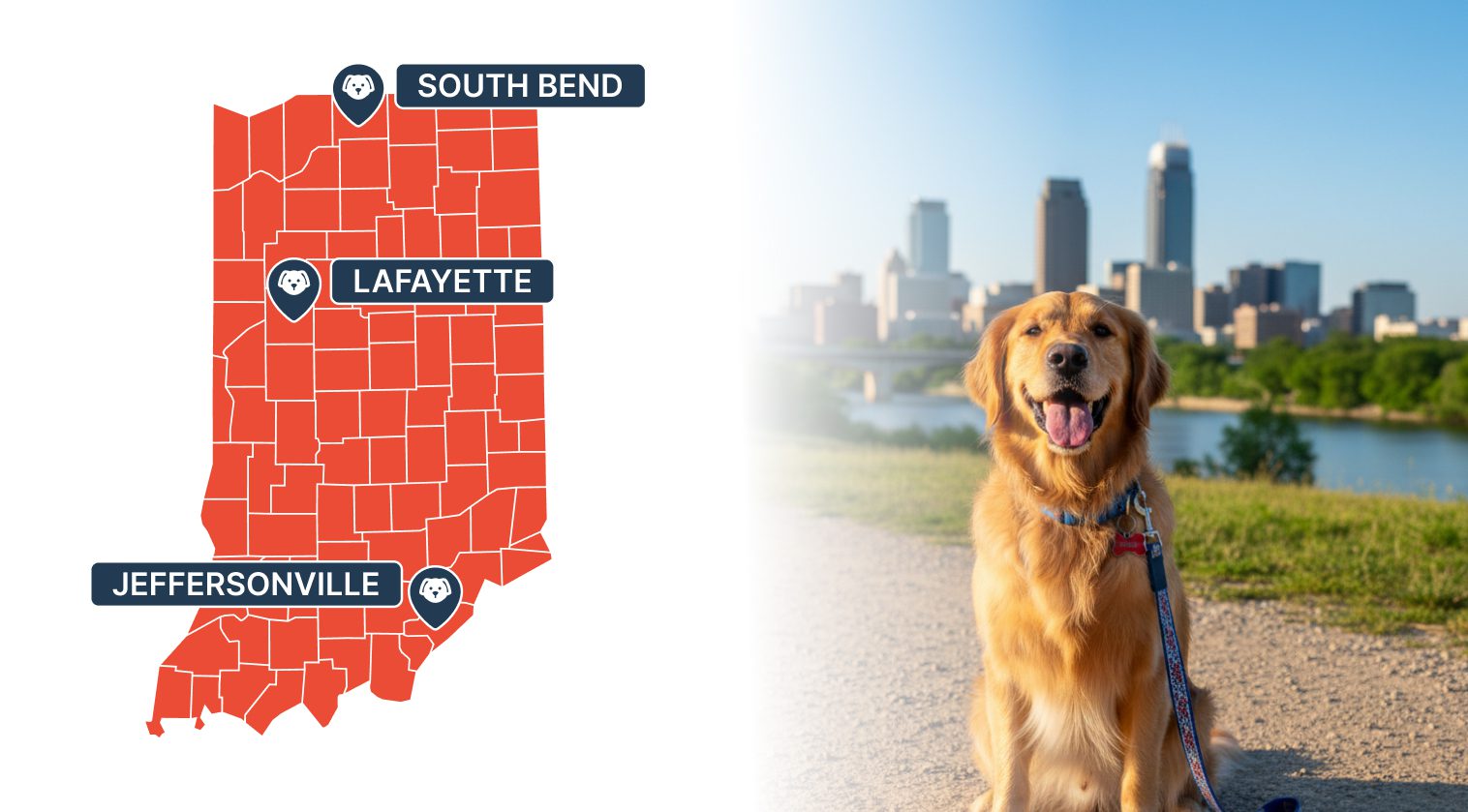
Below, we overview ESA laws in the most popular cities in Indiana; to find out more, including how to get a legally valid ESA letter in these cities, click on the linked heading for the city you’re curious about.
ESA Laws in Indianapolis
As Indiana’s largest and most urban city, Indianapolis has a diverse housing market, ranging from luxury apartments downtown to older multi-unit buildings in Broad Ripple and Irvington. Landlords in Indianapolis generally follow federal ESA housing laws closely, requesting proper documentation but otherwise accommodating emotional support animals.
There are more pet-friendly amenities in Indianapolis compared to smaller towns, including pet-friendly cafés, groomers, and trails, which makes ESA ownership more accessible. If a dedicated ESA letter Indianapolis guide exists, readers can explore more city-specific nuances there.
ESA Laws in Fort Wayne
Fort Wayne tends to have more traditional rental policies, but landlords still must comply with FHA requirements. Tenants with a valid ESA letter cannot be denied housing due to breed restrictions or no-pet rules. This is particularly important in older complexes or properties managed by small landlords.
Public transportation options are limited here, and local transit considers ESAs as pets rather than service animals. However, most residents encounter no obstacles once they provide the necessary documentation.
ESA Laws in Evansville
Evansville’s housing market is known for affordability, but property managers may have less experience handling ESA requests. This sometimes leads to misunderstandings about what landlords can or cannot require. Fortunately, Evansville officials and rental associations increasingly promote FHA compliance.
ESA Laws in South Bend
Home to universities and a rotating student population, South Bend frequently sees ESA requests from students living in off-campus rentals. Landlords are required to comply with federal protections, even for short-term leases or those focused on students. Some student housing communities are stricter with animals, making proper ESA documentation essential.
ESA Laws in Carmel
Carmel’s upscale housing market often features additional pet amenities and enhanced tenant services. Larger property management companies in the area typically have dedicated departments for accommodations, which can make the approval process for ESAs more efficient. However, premium apartments may still necessitate a thorough review of documentation. Tenants are encouraged to submit their ESA letter early in the leasing process
ESAs vs Psychiatric Service Dogs in Indiana
Emotional support animals (ESAs) and psychiatric service dogs (PSDs) are often misunderstood, as they operate under different legal frameworks in Indiana. A PSD is specifically trained to perform tasks that assist individuals with psychiatric disabilities, such as interrupting panic attacks or providing deep-pressure therapy. PSDs are recognized as service animals under the Americans with Disabilities Act (ADA), which allows them to accompany their handlers in public places, workplaces, and on airplanes. In contrast, ESAs do not have these same legal privileges.
Indiana residents often pursue PSD training when they require a higher level of support or need access to public spaces where ESAs are not permitted, including restaurants, stores, and public transport. For guidance on obtaining a PSD, visit US Service Animals’ PSD resources.
How to Get a Psychiatric Service Dog in Indiana
To get a PSD in Indiana, individuals must have a diagnosable psychiatric disability and require a trained dog to assist with symptoms. Unlike ESAs, PSDs must undergo specialized training. US Service Animals offers a PSD training course and a consultation form that Indiana residents can use to begin the process. Many individuals choose the online PSD program for its flexibility, allowing them to train their dog to meet ADA standards while receiving expert guidance.

FAQs About Indiana Emotional Support Animal Laws
Below are some of the most common questions Indiana residents have about emotional support animal laws and ESA rights across cities like Indianapolis, Fort Wayne, Evansville, South Bend, and Carmel.
Does Indiana Recognize Emotional Support Animals?
Yes. Indiana recognizes emotional support animals through federal housing protections, meaning ESAs must be accommodated in most housing situations across the state.
Who Can Write an ESA Letter in Indiana?
Any licensed mental health professional practicing in Indiana can write an ESA letter, including psychologists, psychiatrists, therapists, and social workers.
How Fast Can I Get an ESA Letter in Indiana?
Many Indiana residents can receive an ESA letter within 24–48 hours after consultation, depending on the provider.
Are Online Consultations for ESA Letters Legal In Indiana?
Yes. Indiana permits telehealth appointments, meaning ESA letters obtained online through legitimate providers are legally valid.
Can a Landlord Deny an ESA Letter in Indiana?
Only in limited circumstances, such as when the animal poses a safety threat or would cause substantial property damage. Otherwise, Indiana landlords must accept valid ESA letters.
Can A Landlord Charge a Pet Deposit for an Emotional Support Animal In Indiana?
No. Under the FHA, Indiana landlords cannot charge pet deposits or pet rent for ESAs.
Can I Bring My ESA to Work in Indiana?
Workplaces in Indiana are not required to accommodate ESAs, although some may choose to allow them voluntarily.
Are Emotional Support Animals Allowed in Hotels in Indiana?
Hotels in Indiana treat ESAs as pets. This means they may charge pet fees or restrict certain animals.