Psychiatric Service Dog Guide: PSD Laws, Tasks, Training, and Costs
Are you curious if a psychiatric service dog (PSD) could help improve your life? Below, we break down everything you need to know about PSDs, including what they are, what tasks they perform, who can qualify for one, how PSD training works, what your legal rights are, and how much they cost.
What Is a Psychiatric Service Dog (PSD)?
The answer to “What is a psychiatric service dog?” is simple: a psychiatric service dog is a type of service dog that performs tasks related to a psychiatric disability, like panic disorder or post-traumatic stress disorder. They are highly skilled and trained dogs that can uphold a wide range of duties to ensure the well-being of their handlers.
Some of the common duties they perform, which we will cover in the coming parts below, include interrupting harmful behaviors and providing tactile stimulation to calm the handler during an episode. A psychiatric service dog’s capabilities have a profound impact on the handler’s life, as they can help them live more independently.
However, there are rules and regulations around psychiatric service animals that everyone interested in getting one for themselves or a loved one must understand. Read on below to learn everything about psychiatric service dogs, from the conditions that qualify for one to living with one by your side to tips on training a service dog yourself.
How to Get a Psychiatric Service Dog
There are various ways to get a psychiatric service dog. You can buy a psychiatric service dog from a dog training organization that trains these dogs, send your dog to a service dog training bootcamp, or invest in training materials to train your own psychiatric service dog, like our online service dog training course.
All these ways to get a service dog have their own pros and cons, but one thing is for sure: you (or the person you intend to get one for) must qualify for a psychiatric service dog in order to be able to get one.
What Conditions Qualify for a Psychiatric Service Dog?
– 
–
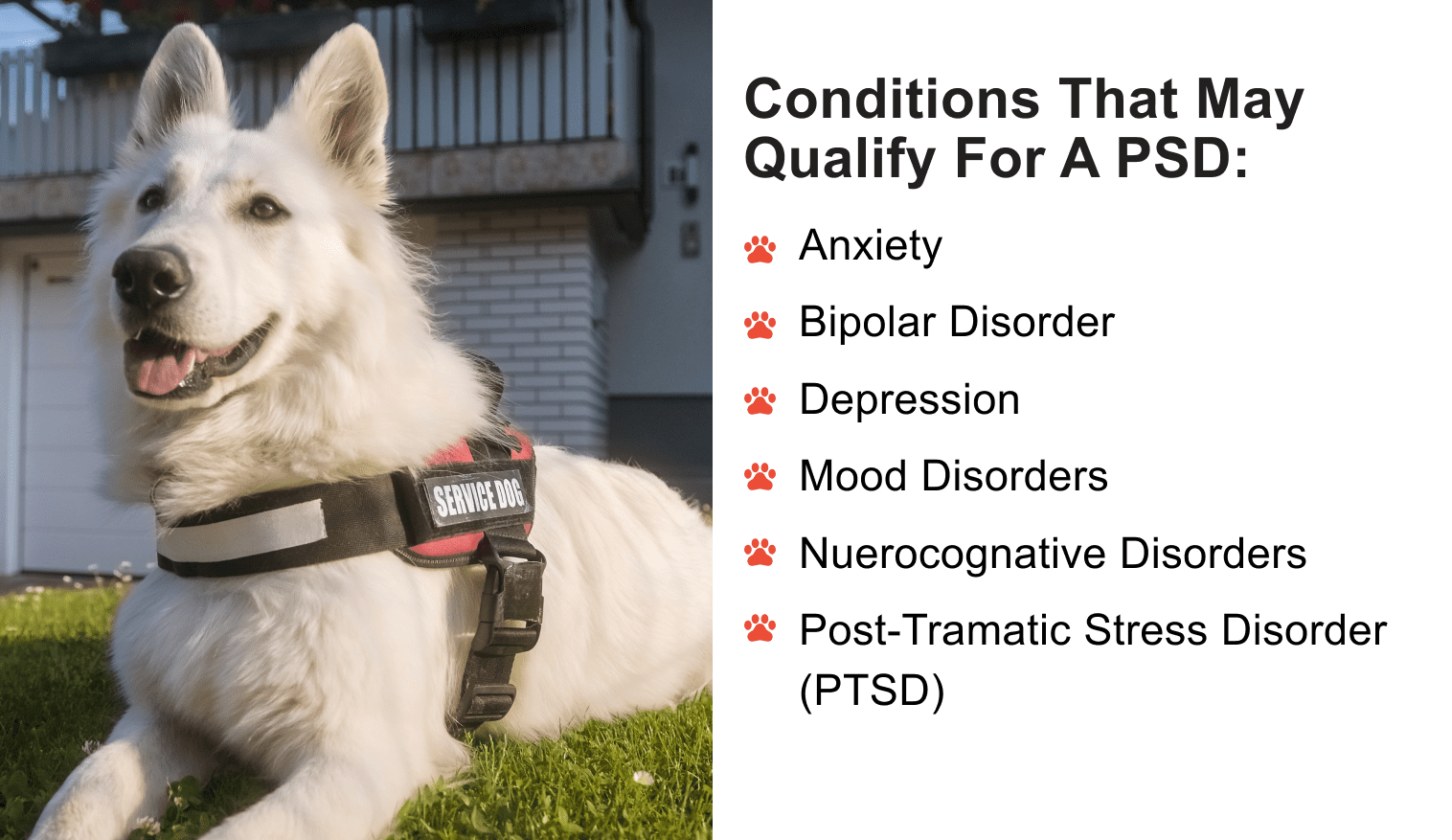
Any psychiatric condition that a psychiatric service dog can help with may qualify for a PSD or a psychiatric service animal. For instance, someone with an anxiety disorder may have a service dog that grounds them during their panic attacks, while someone with schizophrenia may have one that checks for hallucinations.
Some of the most common conditions that qualify for a psychiatric service dog include anxiety, bipolar disorder, depression, dissociative disorders, mood disorders, neurocognitive disorders, post-traumatic stress disorder (PTSD), and schizophrenia. If you have an emotional support animal for any mental or emotional condition, you almost certainly already qualify for a PSD as well.
If you aren’t sure if you qualify for a psychiatric service dog, you can reach out to us today for your free service dog consultation.
Can I Get a Psychiatric Service Dog for Depression?
Absolutely! Since depression is a recognized mental health disorder, most individuals with depression qualify for a psychiatric service dog.
However, in order for a dog to be a psychiatric service dog, they must perform tasks directly related to your depression. This can be retrieving medication, interrupting harmful behaviors, and redirecting attention through nudging or pawing when you’re visibly stressed.
Can I Get a Psychiatric Service Dog for Anxiety?
Anxiety is one of the most common psychiatric disabilities that makes people turn to a psychiatric service dog for support. If you’re suffering from anxiety, a psychiatric service animal can help ease your symptoms and provide assistance through grounding techniques and alerting others.
Can I Get a Psychiatric Service Dog for PTSD?
Psychiatric service dogs are a very common treatment option for those with PTSD or C-PTSD. PTSD service dog tasks can include grounding during flashbacks, waking their handler from nightmares, checking if a location is safe before their handler enters, or helping guide their handler out of a triggering environment. Larger PSDs can also perform deep pressure therapy, a grounding technique that can help calm some symptoms of post-traumatic stress disorder.
What Are the Legal Rights of PSD Dogs?
Individuals with PSDs are entitled to public access under the ADA so that they have the freedom to access public services without prejudice. Below are the main public rights granted to individuals with psychiatric service dogs:
- Owners of a PSD have access to nearly any public areas where pets are normally not allowed. This includes most grocery stores, restaurants, taxi cabs, theaters, buses, government buildings, medical offices, parks, churches, airplanes, and more.
- PSDs can access public areas without incurring a pet fee. Airlines, landlords, or hotels cannot charge an owner extra for bringing their dog. This is highly beneficial to the handler as pet fees can generally be quite high.
- In the case of accommodation, landlords must make reasonable accommodations for a service dog, even if the apartment, house, or dorm normally doesn’t allow pets.
- Public entities cannot seat handlers with PSDs away from regular patrons. They must be treated equally to all other guests.
These federally protected rights can be reassuring for individuals with psychiatric service dogs as they can access services while still having the comfort and protection of their animal.
Do Psychiatric Service Dog Laws Vary By State?
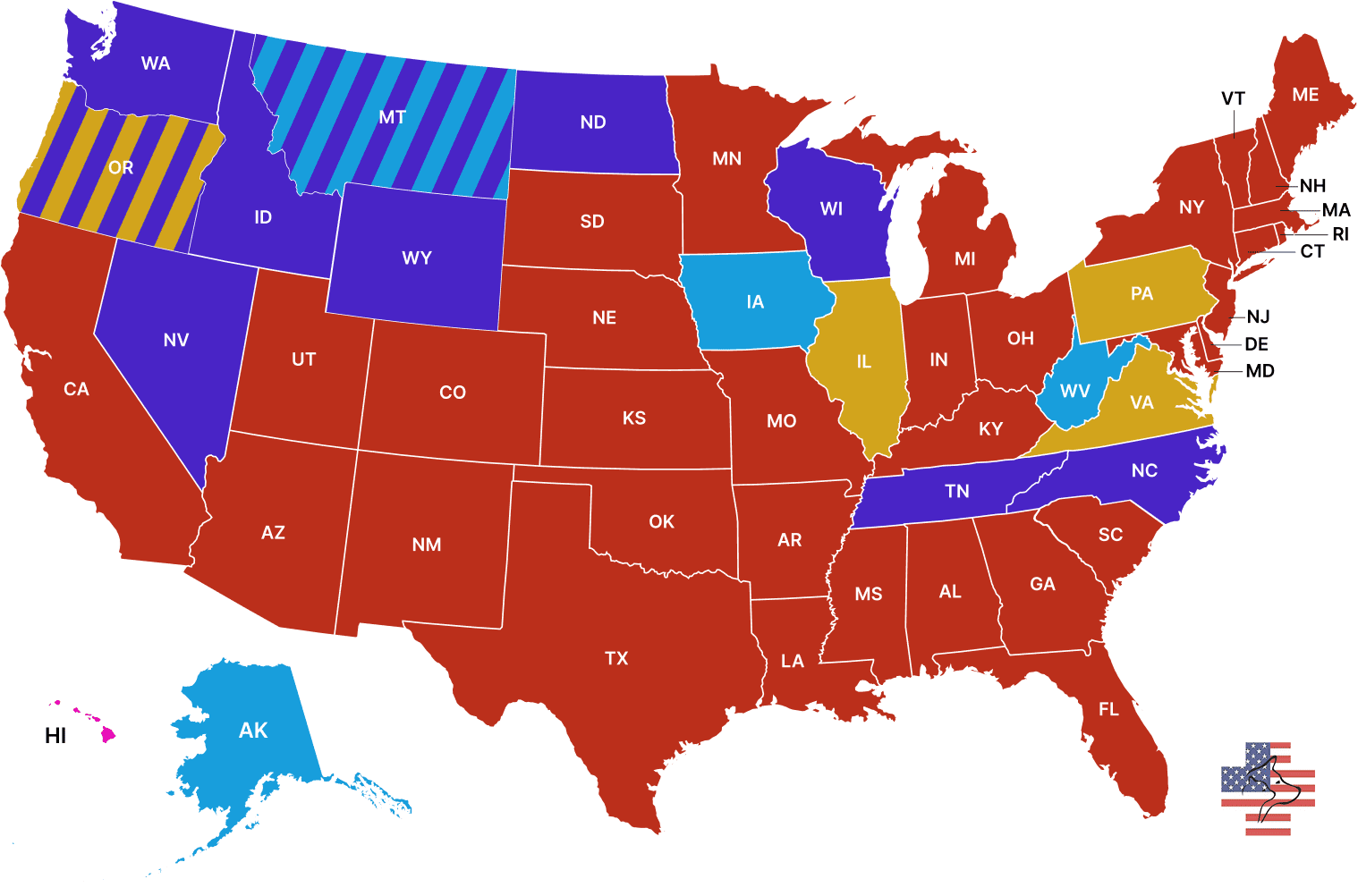
While all states must follow federal service dog laws, a few states have slight additional rules or protections. We cover these in the table below.
– 
–
| Category | States | Notes |

Federal ADA only (no major state-level differences) |
Arizona, Arkansas, Alabama, California, Colorado, Connecticut, Delaware, Florida, Georgia, Indiana, Kansas, Kentucky, Louisiana, Maine, Maryland, Massachusetts, Michigan, Minnesota, Mississippi, Missouri, Nebraska, New Hampshire, New Jersey, New Mexico, New York, Ohio, Oklahoma, Rhode Island, South Carolina, South Dakota, Texas, Utah, Vermont, Washington, Washington D.C. | These states all have state-level deviations from the ADA when it comes to SDIT, interference with SDs, SD fraud and licensing exceptions. You can find details here. |

Service animals in training are protected |
Idaho, Oregon, Nevada, Montana, North Carolina, North Dakota, Wisconsin, Tennessee, Wyoming | Service animals in training have public access rights in these states. |

Service animals in training NOT protected |
Hawaii | Hawaii is the only state that excludes service animals in training from access laws. |

No criminal penalties for interfering with service animals |
Alaska, Iowa, Montana, West Virginia | These states do not criminalize harassment, injury, or interference with service animals. |

Expanded protections / unique provisions |
Illinois, Pennsylvania, Virginia, Oregon | See below for details. |
- Illinois – Service dogs are allowed in pools to perform service dog tasks only
- Pennsylvania – Replacement cost protections if the animal is harmed under specific circumstances
- Virginia – In certain cases, an aide can handle a service dog
- Oregon – City pet licensing fees may be waived for service dogs; city registration may still be required
Can Psychiatric Service Dogs Fly On Airplanes?
Psychiatric service dogs, like any other service animal, can fly on airplanes with their handlers, according to the Air Carrier Access Act. Airlines must permit individuals with a service animal to fly in the passenger cabin free of charge, without subjecting them to pet travel restrictions.
However, there are certain air travel requirements every psychiatric service dog owner should know before flying. Here’s everything to note before flying with a psychiatric service dog.
What Are the Requirements for Flying With a Psychiatric Service Dog?
– 
–
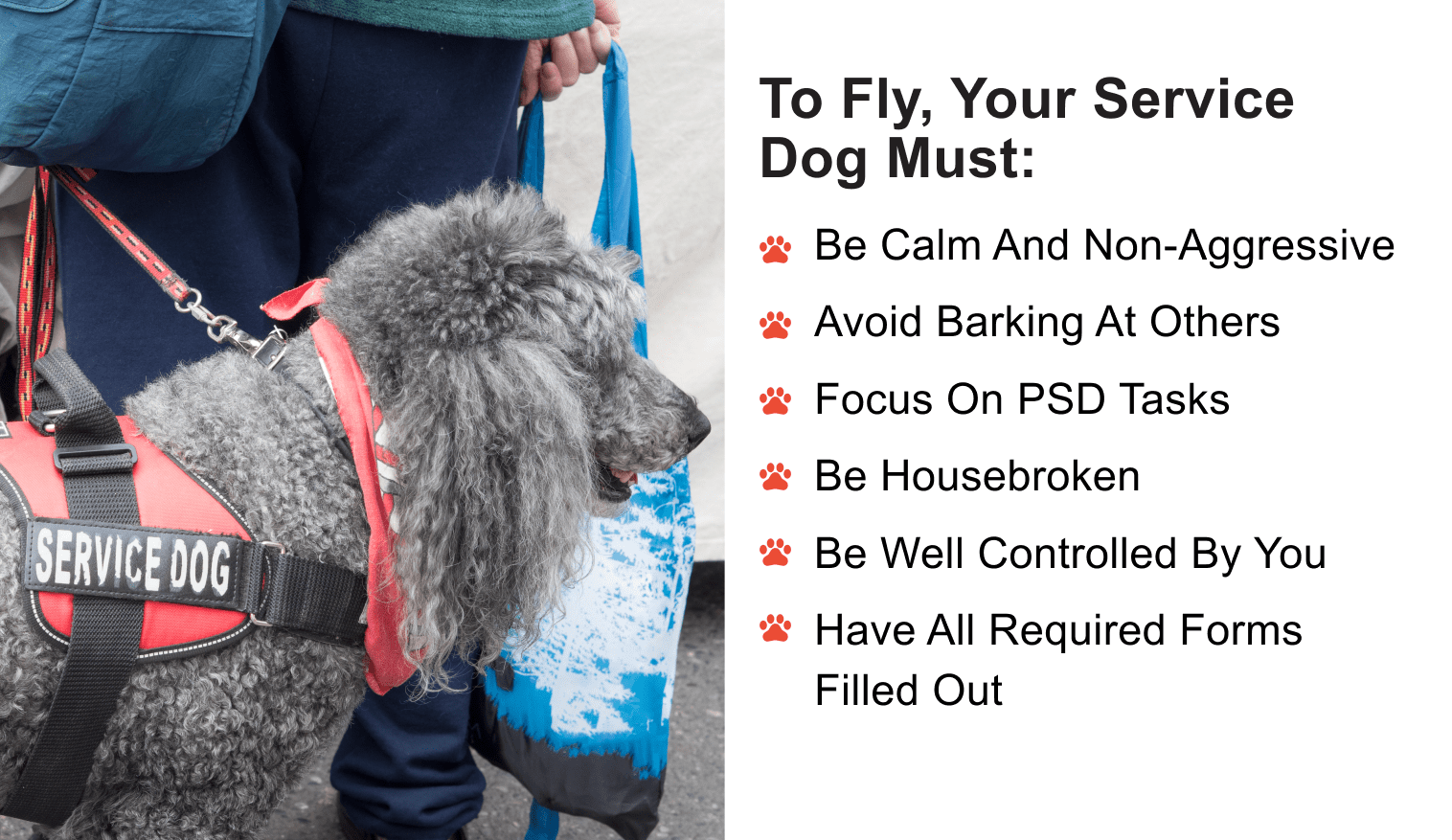
First and foremost, the psychiatric service dog in question must be well-behaved in all public situations, meaning they should be calm, housebroken, and task-focused. If the psychiatric service dog barks at other passengers or misbehaves in any other way, and the handler can’t get the dog under control, it can give the airline the right to remove the psychiatric service dog.
In accordance with the Air Carrier Access Act, airlines may also require handlers to complete certain Department of Transportation forms, such as the Service Animal Air Transportation Form and/or the Service Animal Relief Attestation Form for longer flights. If the airline requires any of these, the handler must complete these forms as soon as possible after booking.
These forms are intended to attest to the psychiatric service dog’s training, behavior, and health. We recommend preparing these forms beforehand for a smooth flying experience.
Where Can I Bring My Psychiatric Service Dog?
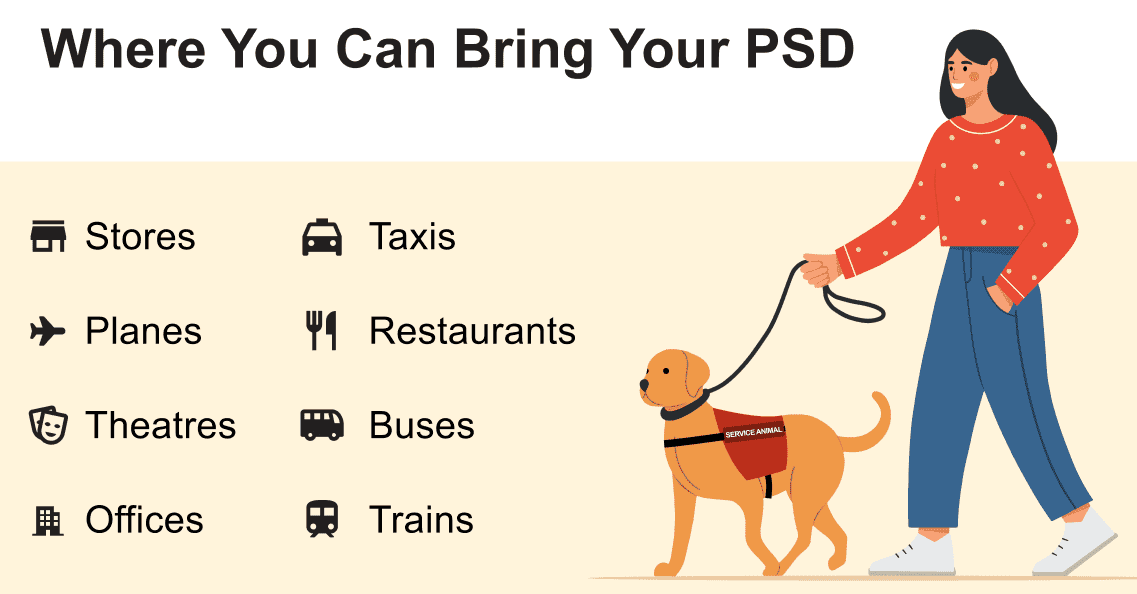
Thanks to the Americans with Disabilities Act, you can bring your service dog with you to almost any place in public, including most restaurants, shops, offices, or theaters. You can even bring them with you on most public transportation, in taxis (including Ubers), and in an airplane cabin.
Generally speaking, the only times you cannot bring your PSD with you are if they will interfere with the purpose or safety of a space (like an operating room), or if your service dog is misbehaving, aggressive, or destructive.
– 
–
Can Landlords Deny a Psychiatric Service Dog?
When it comes to housing protections, the Fair Housing Act grants the same protections to psychiatric service dogs as emotional support animals. Landlords cannot deny a psychiatric service dog, even if the lease or the rental agreement has a no-pet clause. The same applies to buildings with pet restrictions, whether on breed, weight, or size.
However, the landlord can ask the service dog to be removed if their presence causes undue hardship. For instance, your landlord might argue that having a Great Dane as your psychiatric service dog in a small studio apartment creates space and safety concerns. Similarly, a landlord can ask for the removal of a psychiatric service dog if the dog’s behavior is disruptive to other tenants.
Psychiatric Service Dog Tasks: What Are Service Dogs Used For?
Psychiatric service dogs (PSDs) are trained to carry out a wide range of tasks to help mitigate the symptoms of a mental disorder or disability. Not only can they be trained to tune in to their handler’s state of mind, but they can learn specific commands that are vital in emergency situations.
These include things like calming their handler, fetching an item, guiding them to an exit from a triggering environment, calling for help, or alerting them to danger. For a more detailed look at the type of tasks a PSD can perform, you can explore our guide to psychiatric service dog tasks.
Psychiatric Service Dog Training: PSD Dog Requirements and Tips
A dog must be able to perform a disability-related task in order to become a psychiatric service dog. Here’s what you need to know about psychiatric service dog training, including training one yourself.
How to Train a Psychiatric Service Dog
The approach to training a psychiatric service dog largely depends on the type of task the service dog needs to learn. Dog trainers can employ a variety of methods to train a service dog, but one crucial detail that remains consistent across all types of psychiatric service dog training is the use of positive reinforcement.
Just like for any other type of training, positive reinforcement is the most effective method when you want to have a well-trained psychiatric service dog that listens to all your commands. It also helps the candidate dog build positive associations with their work, which will encourage them to do better.
Another critical part of psychiatric service dog training is incorporating distractions in the process. Psychiatric service dogs must execute commands regardless of what’s happening around them to ensure they stay on task, no matter what, which is crucial for the handler’s well-being.
Training a Psychiatric Service Dog Yourself
Training a psychiatric service dog yourself is one way to go about having a service dog. If you’re experienced in training dogs and have the appropriate training materials, it is possible to train a psychiatric service dog yourself.
However, you should be realistic about the process. For instance, you can’t expect a nine-year-old Chihuahua to be your psychiatric service dog to provide deep pressure therapy or tactile stimulation. Before starting psychiatric service dog training, make sure the dog you want to train is suitable for the task related to your or someone else’s psychiatric disability.
Is Online Service Dog Training Effective?
Without a doubt, online service dog training is one of the most effective ways for training a psychiatric service dog. As long as you use online training materials from a credible organization, like the online service dog training course offered by us here at US Service Animals, and follow everything down to the smallest detail, you will have a well-trained psychiatric service dog in the most cost-effective way possible.
It all comes down to following the online course and practicing what your dog learns in different environments to ensure your psychiatric service dog is task-focused even in the presence of distractions.
What Is the Average Psychiatric Service Dog Cost?
The cost of a psychiatric service dog depends on how you get one. If you’re buying a pre-trained psychiatric service dog from an organization, it is typically between $15,000 and $30,000, with highly specialized dogs for specific mental health conditions costing up to $50,000. If you’re getting a psychiatric service dog from a nonprofit, the cost is typically between $5,000 and $20,000.
As for hiring a professional to train your dog for psychiatric service dog tasks, the cost can be anywhere between $100 to $600 or more per hour. There are also board and train programs for psychiatric service dogs that last for months, which can cost up to $10,000. The most affordable option is typically training your service dog yourself, including by an online course.
| Option | Cost Range | Summary |
| Pre-trained psychiatric service dog (organization) | $15,000 – 30,000 | Specialized dogs for specific mental health conditions can cost up to $50,000 |
| Psychiatric service dog (nonprofit) | $5,000 – 20,0000 | Typically more affordable than buying from organizations |
| Professional trainer (hourly) | $100 – $600
per hour |
Costs vary by trainer experience and tasks required |
| Board & train program | Up to $10.000 | Multi-month programs where the dog lives with trainers |
| Self-training (including online course) | $349.99 and Up | Most affordable option, but requires significant personal effort |
While this is the average cost to get or have a dog trained for psychiatric service dog work, note that there will also be ongoing expenses, which should be at least a few thousand dollars a year.
How Much Does It Cost to Train a Psychiatric Service Dog Online?
Using online methods to train a psychiatric service dog, such as our psychiatric service dog training course, is the most cost-effective way of having a PSD. On average, online psychiatric service dog training courses cost between $250 and $1,000.
If you have the availability to train your own psychiatric service dog, it can be just as effective as working with a private service dog trainer in person. Following an online course can also help in other training types, as you will have a better understanding of dog behavior and how dogs learn new skills by the time you finish.
What Are the Best Psychiatric Service Dog Breeds?
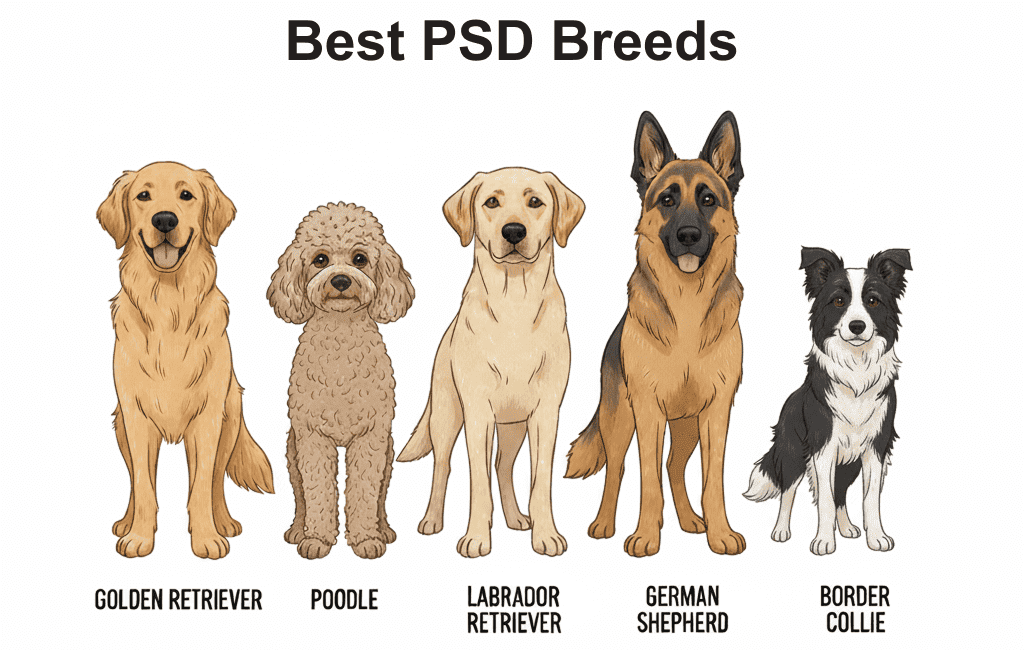
The best psychiatric service dog breeds tend to be those with exceptional intelligence, trainability, and reliability, making them solid choices for an assistance dog.
– 
–
When considering these traits, the breeds that come to mind often include the golden retriever, poodle, Labrador retriever, German shepherd, and border collie. With the right temperament, Pomeranians, Cavalier King Charles spaniels, and bichon frises can also make excellent psychiatric service dogs for individuals who prefer a smaller dog.
If you don’t currently own a dog and are considering buying a puppy or adopting a dog for psychiatric service dog work training, we recommend checking out our service dog breeds guide.