
If you are a Virginia resident with an emotional support animal (ESA), or if you are considering one, it is very helpful to know your rights. Navigating the rules for ESAs can often feel complicated.
While federal laws, like the Fair Housing Act (FHA), apply in every state to provide baseline protections, some states have added their own specific rules for getting an ESA letter. In Virginia, the rules largely align with federal guidelines, which is great news for residents seeking accommodation. These laws offer you solid protections against housing discrimination.
However, you still need to follow the correct steps to make sure your animal is properly recognized. This article will cover the federal laws that apply nationwide, your rights as an ESA owner, and the specific requirements for obtaining a legitimate ESA Virginia letter.
Virginia ESA Laws: Summary of Legal Protections
Understanding Virginia emotional support animal laws is essential for both ESA owners and entities like landlords, employers, and airlines, as these laws ensure that individuals with ESAs are granted reasonable accommodations while balancing the rights of all parties involved.
Emotional Support Animal Virginia Regulations: ESA Laws in Virginia
Below, we break down the key areas of Virginia’s ESA regulations, including housing, employment, and travel, to help you navigate the legal landscape and know your rights and responsibilities.
Virginia ESA Housing Laws
Under the Fair Housing Act (FHA) and Virginia Code § 36‑96.3:1, landlords must make reasonable accommodations for tenants with valid ESA letters, even if the property enforces a “no pets” policy. This provision prevents property owners from charging pet deposits, extra rent, or denying housing to ESA owners because of the animal’s species or breed.
Landlords and housing providers must allow ESAs if the tenant provides documentation from a licensed mental health professional (LMHP) confirming the need for the animal. Virginia does not require ESAs to be registered or certified, but landlords may request verification of the disability-related need for the animal.
Virginia ESA Employment Laws
When it comes to employment in Virginia, the protections for ESAs are much weaker. The federal Americans with Disabilities Act (ADA) requires employers to provide “reasonable accommodations” to employees with disabilities, but that statute focuses mostly on service animals (trained to perform tasks) rather than emotional support animals.
As such, allowing an ESA in the workplace is entirely up to the employer’s discretion. An employee may request an accommodation, but the employer is not legally obligated to approve it. The request should be supported by documentation from a licensed mental health professional, but even then, the employer can deny it if it creates “undue hardships”.
Virginia ESA Travel Laws
In Virginia, emotional support animals are not granted the same access rights as service animals. Public transportation systems, like buses and trains, are not required by federal law to accommodate ESAs, though some may allow them at their discretion.
The same goes for hotels, stores, and other public places. There is no legal obligation. A business owner has the right to deny entry to an ESA. If you need more clarity, consider should checking the policies of individual establishments, as some may permit ESAs while others may not.
Virginia ESA Travel and Flying Laws
The Air Carrier Access Act (ACAA) previously required airlines to accommodate emotional support animals, but as of 2021, the U.S. Department of Transportation (DOT) revised its rules to classify ESAs as pets rather than service animals. This means airlines are no longer required to allow ESAs in the cabin free of charge.
Each airline now sets its own policies regarding ESAs, which may include fees, carrier requirements, or outright bans. So, it’s crucial to check with your airline to understand their specific ESA policies. Some may still accommodate ESAs with advance notice and documentation, while others may treat them as regular pets.
How to Get an ESA Letter in Virginia: ESA Letter Virginia Requirements
Getting a valid emotional support animal letter Virginia residents can use for housing is the most important step in having your animal recognized. This letter is the official document from a licensed professional that you can use to request reasonable accommodation. Check out our in-depth guide to learn more about the process of how to get an ESA letter.
Unlike some other states, Virginia has not passed specific state-level laws that add extra requirements for healthcare professionals writing ESA letters. The state’s law does, however, define a “therapeutic relationship” as one where the provider has actual knowledge of your disability and your need for the animal. It also prohibits providing fraudulent documentation.
This means Virginia residents largely follow the federal guidelines set by HUD. This makes the process accessible, as you are not required to have an extensive relationship with your provider before receiving a Virginia ESA letter, a rule that exists in several other states. Below, we cover who needs a letter and the specific steps to get one.
Do You Need an ESA Letter in Virginia?
Yes, if you want your emotional support animal to have housing rights under the Fair Housing Act (FHA), you must have a valid ESA letter in Virginia. This letter is the only way to legally differentiate an ESA from a regular pet.
Without this letter, a landlord can legally deny your animal, even if you have a disability. They can also charge pet fees or enforce breed or weight restrictions. A valid ESA letter requires them to provide reasonable accommodation, making your animal exempt from most pet-related rules and fees.
Who Can Write an ESA Letter in Virginia?
Only a licensed mental health professional (LMHP) who is legally permitted to practice in the state can write an ESA prescription letter in Virginia. The professional must hold an active license and must have conducted a legitimate evaluation to determine that you have a qualifying emotional or mental health condition.
ESA Virginia Registration: ESA Certification in Virginia
In Virginia, there is no legal requirement to register or certify your emotional support animal. The only document that gives your animal legal recognition is a valid ESA letter written by a licensed mental health professional.
Some organizations offer ESA certification, but certification alone does not provide any legal protections. It does not replace your ESA letter or give you additional rights under Virginia or federal law. That said, registering your ESA can still be useful. A certification or ID card can make it easier to:
- Show your landlord or housing provider that your animal is legitimate.
- Confirm that your ESA letter came from a verified and licensed provider.
- Avoid unnecessary questions or confusion about your animal’s role.
You should only register your ESA after getting a valid ESA letter. Certification is an optional step for convenience, not a legal requirement. Think of it as extra documentation that supports, but never replaces, your official ESA letter.
Get an ESA Letter in Cities Across Virginia
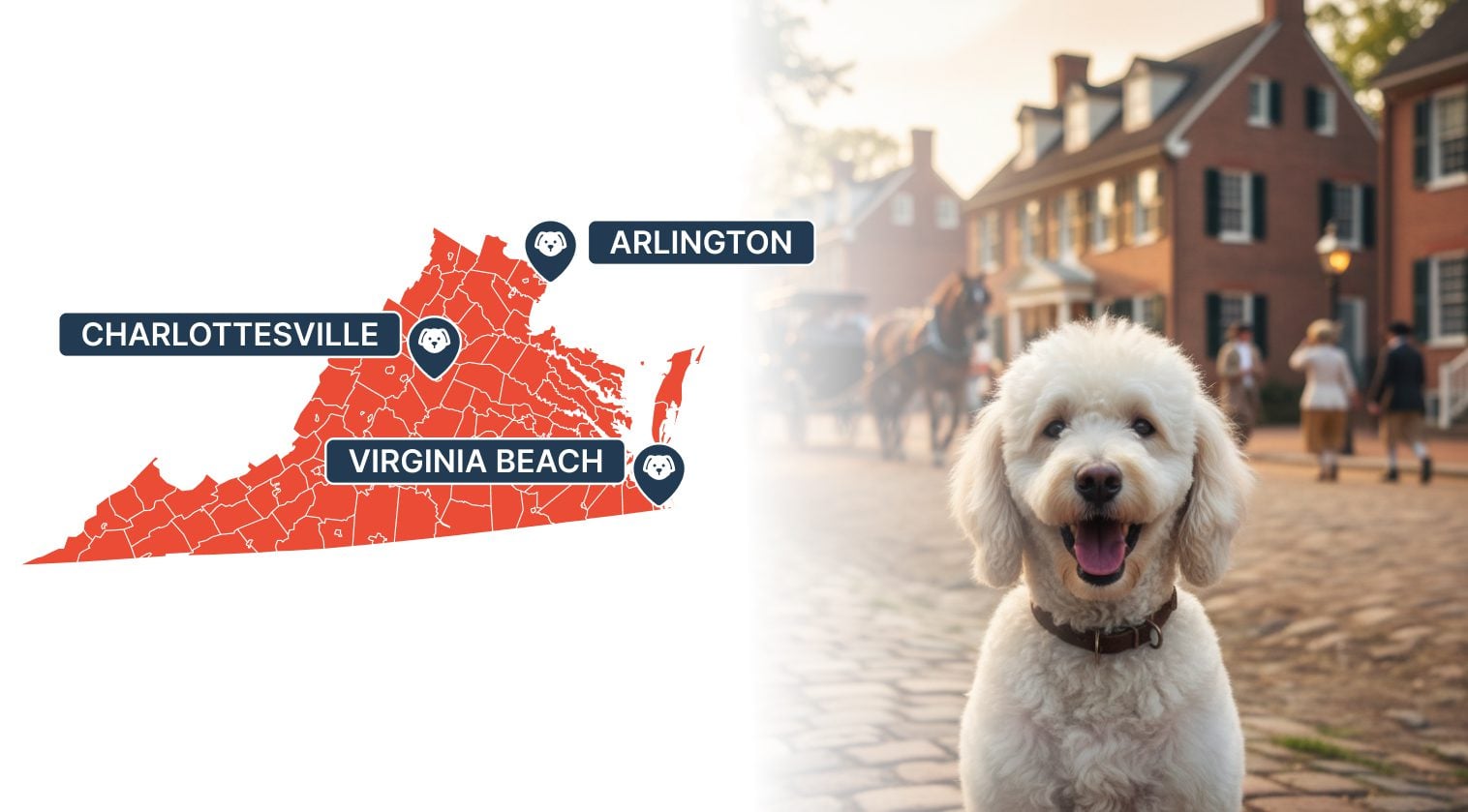
Below, we overview ESA laws in the most popular cities in Virginia; to find out more, including how to get a legally valid ESA letter in these cities, click on the linked heading for the city you’re curious about.
ESA Laws in Virginia Beach
Virginia Beach is one of the most pet-friendly cities in the state. Residents can enjoy dog-friendly restaurants, oceanfront parks, and pet-welcoming rentals throughout the city. Under Virginia emotional support animal laws, Virginia Beach follows both state and federal ESA rules, giving residents the right to live with an ESA in housing that normally restricts pets.
While ESAs don’t have public access rights, Virginia Beach’s many open spaces make it easy to find ESA-friendly environments. Make sure your Virginia Beach ESA letter comes from a licensed mental health professional to qualify for Fair Housing protections.
ESA Laws in Chesapeake
Chesapeake follows the same Virginia emotional support animal laws as the rest of the state. Residents must have a valid ESA letter in Chesapeake to ensure their animal is recognized as an emotional support animal rather than a pet.
The city’s quiet neighborhoods and green spaces ake it ideal for ESA owners. While housing protections apply broadly, ESAs do not have the same privileges as service animals in stores, offices, or restaurants. Always keep your ESA letter on hand to simplify any housing-related conversations.
ESA Laws in Richmond
In Virginia’s capital, the housing rights for your ESA are protected by the FHA and Virginia’s Fair Housing Law. A landlord in Richmond cannot charge pet rent or deny your housing application because of your ESA. To use these protections, you must qualify for and obtain an ESA letter from a professional licensed to practice in Virginia.
Richmond is known for being very pet-friendly. The city has a vibrant brewery scene, and many local breweries welcome well-behaved pets on their patios. Areas like Carytown and Shockoe Slip also feature many pet-friendly shops and restaurants with outdoor seating. Having a legitimate Richmond ESA letter ensures your rights are recognized under federal law.
ESA Laws in Norfolk
Norfolk residents with emotional support animals receive housing protections under both federal and state law. A legitimate ESA letter in Norfolk from a licensed mental health professional allows tenants to live with their ESA in properties with no-pet rules.
The city is known for its coastal lifestyle and pet-welcoming atmosphere, featuring dog-friendly cafes, waterfront parks, and outdoor markets. However, ESAs still lack public access rights, so they should only accompany their handler where animals are permitted.
ESA Laws in Arlington
Living in Arlington means you have the same ESA protections as all Virginia residents. The FHA ensures your landlord must provide reasonable accommodation for your animal. The process for getting an ESA letter in Arlington follows the same simple guidelines we covered earlier, requiring an evaluation from a licensed provider.
Arlington is one of the most dog-friendly areas in the state. It features numerous designated dog parks, including the well-known Shirlington Dog Park. You will also find many restaurants and cafes, like Copperwood Tavern or Northside Social, with outdoor seating that allow you to dine with your animal.
ESAs vs. Psychiatric Service Dogs in Virginia
Emotional support animals (ESAs) and psychiatric service dogs (PSDs) both help people with mental or emotional disabilities, but they are not treated the same under the law in Virginia.
An ESA provides comfort and companionship that can ease symptoms of anxiety, depression, or PTSD. However, ESAs are not required to have special training, and they do not have public access rights. Their legal protections mainly apply to housing under the Fair Housing Act and the Virginia Fair Housing Law.
Psychiatric service dogs, on the other hand, are trained to perform specific tasks that directly assist with a person’s disability. Because of this training, PSDs qualify as service animals under the Americans with Disabilities Act (ADA) and are allowed to accompany their handlers in public places, including restaurants, stores, and workplaces.
If you’re unsure which type of animal best fits your needs, we recommend learning more about training and legal protections for psychiatric service dogs. You can also explore our blog on service dog training in Virginia to see how PSDs are trained to meet specific mental health needs in the state.
How to Get a Psychiatric Service Dog in Virginia
To get a psychiatric service dog (PSD) in Virginia, you’ll first need a diagnosis for a qualifying condition. This can include PTSD, anxiety, depression, or bipolar disorder. A licensed mental health professional or doctor must confirm that a PSD could help manage your symptoms.
Once you have that diagnosis, you can either train your own dog or work with a professional. A PSD must be trained to perform specific tasks that assist with your disability, such as grounding you during panic attacks or reminding you to take medication.
If you prefer guided training, US Service Animals offers an online PSD training course with professional support. You can start by scheduling a free consultation through our PSD training course form.
After completing training, your PSD will qualify as a service animal under the ADA. This means you’ll have public access rights throughout Virginia and across the country. Keep your training and diagnosis records to make housing or travel easier.

FAQs About Virginia Emotional Support Animal Laws
If you’re considering an emotional support animal in Virginia, you probably have questions about how the laws work in the state. The following answers focus on Virginia-specific rules and examples from major cities like Virginia Beach, Richmond, and Arlington.
Does Virginia Recognize Emotional Support Animals?
Yes. Virginia recognizes ESAs primarily under housing law. With a valid ESA letter, residents can request reasonable accommodations in rental properties, even if pets are normally restricted. These protections apply statewide, including cities such as Norfolk, Chesapeake, and Richmond.
Who Can Write an ESA Letter in Virginia?
Only a licensed mental health professional (LMHP) in Virginia can issue a valid ESA letter. This includes psychologists, psychiatrists, licensed therapists, and social workers who evaluate your mental or emotional disability and confirm the need for an ESA.
How Fast Can I Get an ESA Letter in Virginia?
The process can often be completed in a few days to a couple of weeks, depending on the provider and the complexity of your evaluation. Licensed Virginia professionals, including those offering online consultations, can issue a letter once they have reviewed your mental health needs.
Are Online Consultations for ESA Letters Legal In Virginia?
Yes. Online ESA letters are legal if the evaluation is conducted by a licensed Virginia mental health professional. The provider must assess your condition and determine if an ESA is part of your treatment plan. For more details, please contact US Service Animals.
Can a Landlord Deny an ESA Letter in Virginia?
Landlords cannot deny a valid ESA letter under Virginia housing law unless the animal poses a direct threat, causes property damage, or accommodating it would create an undue burden. This applies to rentals across the state, including cities like Arlington and Virginia Beach.
Can A Landlord Charge a Pet Deposit for an Emotional Support Animal In Virginia?
No. Under the FHA, an emotional support animal is not considered a pet. Because it is an assistance animal, landlords in Virginia cannot charge pet fees, pet rent, or a pet deposit. They are, however, allowed to charge you for any actual damage the animal causes to the property.
Can I Bring My ESA to Work in Virginia?
There is no law that requires employers in Virginia to allow emotional support animals in the workplace unlike service animals. Still, you can ask your employer if they will voluntarily allow your ESA as a reasonable accommodation, but it is not a protected right.
Are Emotional Support Animals Allowed in Hotels in Virginia?
ESAs do not have guaranteed access to hotels. Individual hotel policies determine whether an ESA is permitted. Some Virginia hotels, especially in pet-friendly cities like Virginia Beach, may allow ESAs with prior notice.