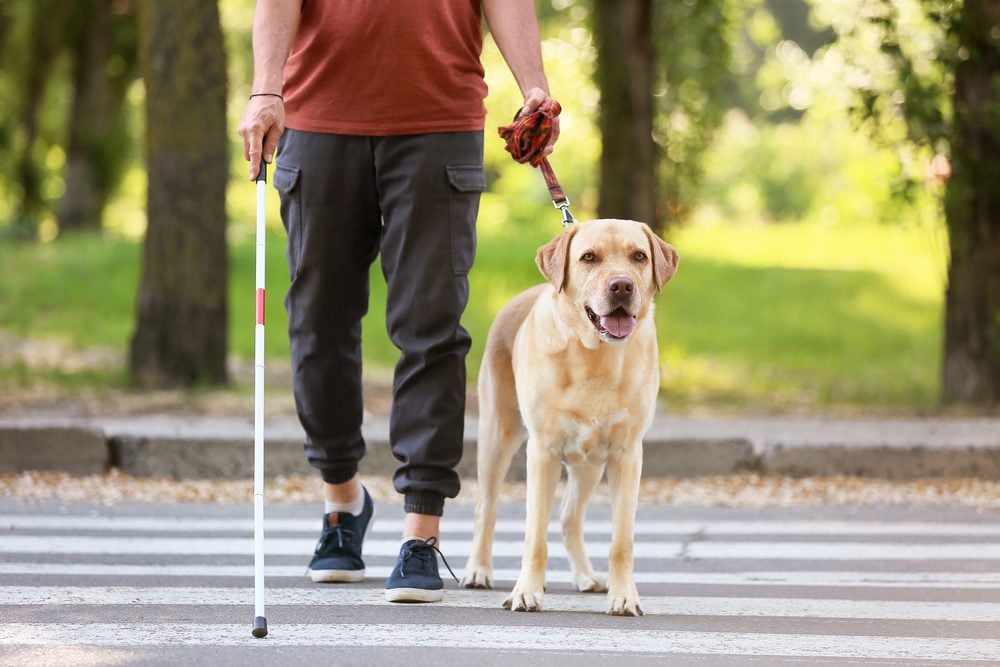
Service dogs are vital companions for many Americans with disabilities, helping with tasks ranging from guiding the visually impaired to alerting those with seizures. Federal law protects the rights of individuals who rely on these animals, ensuring they have access to public spaces and services.
Refusing service to a person with a service dog is illegal and can lead to severe penalties, including fines and lawsuits. This article explains the legal framework surrounding the refusal of service to service dogs, outlines the applicable penalties, and guides how businesses and individuals can comply with the law to avoid costly consequences.
What Is a Service Dog?
A service dog is a specially trained dog that performs tasks for individuals with disabilities. These tasks are directly related to the person’s disability. Common examples include:
- Guiding people who are blind or have low vision.
- Alerting individuals who are deaf or hard of hearing to sounds.
- Assisting individuals with mobility impairments by retrieving items, opening doors, or providing balance support.
- Alerting or protecting individuals during a seizure.
- Helping those with psychiatric disabilities by interrupting harmful behaviors or grounding during anxiety attacks.
Service dogs differ legally and functionally from emotional support animals (ESAs) and therapy dogs because they aren’t trained to perform specific tasks. As such, they don’t have public access rights under the Americans with Disabilities Act (ADA). In contrast, service dogs have legal access rights to public places, including restaurants, stores, and public transportation.
Federal Laws Protecting Service Dogs and Their Handlers
The Americans with Disabilities Act (ADA), enacted in 1990 and subsequently updated, is the cornerstone federal law that protects the rights of people with disabilities who use service dogs.
Key provisions include:
- Public Access: Businesses open to the public, state and local government facilities, and public transportation must allow service dogs accompanying their handlers. This includes restaurants, retail stores, hotels, and taxis.
- Limited Questions Allowed: Businesses can’t ask about the person’s disability, require documentation, or demand proof of training or certification. They can only ask two specific questions if the need for the service dog isn’t obvious:
- Is the dog a service animal required because of a disability?
- What work or task has the dog been trained to perform?
- No Additional Fees: Service dogs are exempt from pet fees and deposits.
- Control and Behavior: The dog must be under control, ideally on a harness, leash, or tether unless these interfere with the dog’s work or the person’s disability. If the dog is out of control and the handler fails to take effective action, the dog may be asked to leave. However, if the dog is well-behaved, it must be allowed entry.
- Health and Safety Exceptions: Service dogs may be excluded if their presence fundamentally alters the nature of a business or if they pose a direct threat to the health or safety of others.
Other laws complement the ADA, such as:
- Fair Housing Act (FHA): This law requires landlords to make reasonable accommodations for service dogs and emotional support animals (ESAs) in housing, regardless of “no pets” policies.
- Air Carrier Access Act (ACAA): This law protects passengers with disabilities who fly on commercial airlines, requiring airlines to permit service dogs in the cabin.
These protections reflect the federal commitment to equal access and nondiscrimination for individuals with disabilities.
What Happens If You Refuse Service to Someone With a Service Dog?
Refusing service to a person with a service dog is considered discrimination based on disability and is illegal under federal law. The consequences for businesses or individuals who refuse can be severe.
However, before we dive into the penalties, let’s break down what “refusal” means in the context of service dogs. Refusal to service a person with a service dog can take many forms, including:
- Denying entry or service outright because of the dog.
- Demanding documentation, ID cards, or proof of training (which the ADA explicitly prohibits).
- Charging additional fees, deposits, or requiring extra cleaning costs because of the dog.
- Harassing or redirecting the handler or their dog, or singling them out unfairly.
- Treating the handler less favorably compared to other customers.
The ADA’s intent is clear: service dogs must be welcomed unless there is a legitimate, legally valid reason for exclusion. Now that we have settled what “refusal” implies, here’s a closer look at the penalties:
Federal Penalties Under the ADA
The Americans with Disabilities Act (ADA) mandates that businesses and public entities cannot deny access to individuals accompanied by service dogs. Violating this can result in substantial penalties, including:
- A $75,000 fine for a first offense.
- Up to $150,000 for repeat offenses.
The U.S. Department of Justice enforces these fines, reflecting the seriousness of ADA compliance. Beyond fines, businesses may also face:
- Civil lawsuits that are filed by the aggrieved individual.
- Financial responsibility for restitution, such as lost wages or medical costs, if the refusal caused harm.
- Compensation for emotional distress and other damages.
Why such stringent penalties? These legal consequences are designed to educate and prevent discrimination. They uphold the dignity of people with disabilities and recognize the critical role service dogs play in their independence.
State-Level Penalties: Stricter and Varied
Several states have laws that complement or go beyond the ADA, often imposing stricter penalties for refusal. Here are a few examples:
- California imposes a minimum fine of $4,000 per incident for denying access to service dogs, with potential legal fees for the disabled person’s attorney. Severe or repeated violations can result in fines of up to $10,000 and even imprisonment.
- Florida classifies denial of access as a second-degree misdemeanor, punishable by community service. Repeat offenses may lead to felony charges, reflecting a strong stance against discrimination.
- Texas enforces fines of up to $300 and requires 30 hours of community service for discrimination against service animal handlers.
- Colorado holds offenders liable for treble damages (triple the usual damages) if willful harm is done to a service animal. This includes costs for replacement, training, and any related losses.
- Many other states have their specific penalties, ranging from fines to criminal charges, highlighting the broad legal consensus on protecting service dog users.
The takeaway? Refusing a service dog can result in significant financial, legal, and reputational consequences for businesses and public entities in the United States.
What to Do If You Are Refused Service With a Service Dog
If you face refusal of service due to your service dog, here’s what you must do:
- Stay Calm and Educate: Politely explain that your dog is a trained service animal protected by law. Share that under the ADA, businesses cannot ask for documentation or proof beyond the two allowed questions.
- Document the Incident: If refusal continues, note the date, time, location, names of staff involved, and any statements made. Photos or videos (if permitted in your state) can also be helpful.
- File a Complaint: If none of the above works, file a complaint with the U.S. Department of Justice Civil Rights Division, state or local disability rights agencies, or the Better Business Bureau for public awareness.
In extreme cases, seek legal advice. For instance, if the refusal causes significant hardship, consider consulting a disability rights attorney who can advise on possible legal options, such as lawsuits or settlements.
How Businesses Can Avoid Penalties for Refusing Service Dogs
Businesses can take several necessary steps to avoid penalties related to refusing service dogs:
- Provide comprehensive training to all employees, including front-line staff and management, so they understand what qualifies as a service dog, the legal requirements under the ADA, and how to respond appropriately to service dog requests.
- Review and update company policies by removing any blanket “no pets” rules or clearly stating that such regulations do not apply to service dogs. Ensure that employee handbooks and customer service guidelines explicitly cover access to service animals.
- Communicate clearly with customers and staff by posting visible notices about service dog access rights and making official ADA resources available to reduce confusion.
- Handle disputes professionally and calmly by listening carefully, avoiding confrontation, and seeking legal counsel if unsure how to proceed.
- Stay informed about state and local laws, which may provide additional protections or requirements beyond those outlined in the ADA, to ensure full compliance.
Taking these steps helps businesses protect themselves from fines, lawsuits, and reputational damage while fostering an inclusive and welcoming environment for all customers.
Penalty for Refusing a Service Dog: A Summary
Refusing service to individuals with service dogs violates federal and state laws, can lead to costly fines, lawsuits, and damage to one’s reputation. The ADA guarantees the right of people with disabilities to access public places with their service dogs. Understanding and respecting these rights is not just a legal obligation but essential for creating an inclusive society.
Businesses that invest in staff training, clear policies, and respectful communication avoid penalties and build goodwill. For service dog handlers, knowing your rights empowers you to advocate for equal access confidently.
At US Service Animals, we provide up-to-date information and resources to help everyone navigate service dog laws and challenges. Respecting these protections ensures independence and dignity for people with disabilities, and benefits us all.