
Understanding emotional support animal (ESA) laws in Florida is essential for anyone who relies on an animal to help manage a mental or emotional disability. While federal ESA laws apply nationwide, Florida has additional regulations, particularly regarding ESA documentation and penalties for fraudulent claims. Being familiar with both state and federal rules helps ensure your ESA is recognized legally and that you receive the housing protections you’re entitled to.
This guide discusses Florida’s ESA laws, obtaining a valid ESA in the state, and the rights residents have regarding housing, employment, travel, and public accommodations. The ESA Florida process in Florida depends solely on obtaining the proper documentation. This article places special emphasis on ESA letter requirements, obtaining one, and who legally qualifies to issue an ESA letter.
Florida ESA Laws: Summary of Legal Protections
Florida emotional support animal laws are based on federal protections, particularly the Fair Housing Act (FHA), which requires landlords to make reasonable accommodations for tenants with ESAs. Florida also enforces its own regulations through Florida Statute §760.27, which outlines documentation standards and establishes penalties for fraudulent ESA claims.
The sections below break down Florida emotional support animal laws, including housing laws, employment rules, public access regulations, and travel-related policies.
Emotional Support Animal Florida Regulations: ESA Laws in Florida
ESAs in Florida are primarily protected in housing; however, they do not receive public access rights. Outside of housing accommodations, they are considered pets and do not qualify for additional rights.
Florida ESA Housing Laws
Florida’s ESA laws are in accordance with the FHA, which means that all landlords must accept a valid ESA letter and allow the animal to live with the tenant without additional charges. These laws apply to condos, townhouses, single-family rentals, and most student housing. Extra pet fees, pet deposits, or pet rent cannot be levied, with no discrimination or restrictions based on the breed or weight of the ESA.
The ESA letter must be issued by a licensed health professional in Florida to be considered valid. Landlords are permitted to request proof of professional licensure. They can only deny an ESA if the animal poses a direct threat to others or causes significant damage to the property. Fraudulent Emotional Support Animal (ESA) documentation is subject to fines as outlined in Florida Statute §760.27.
Florida ESA Employment Laws
ESAs are not protected under the Americans with Disabilities Act (ADA), unlike service animals. Florida employers are therefore not bound by any law to permit ESAs in the workplace. However, employees can request an accommodation, which is ultimately at the employer’s discretion. Some Florida employers voluntarily allow ESAs, especially in office settings or remote work arrangements.
Florida ESA Travel Laws
Public transportation, including buses, trains, and rideshares, is not legally required to allow emotional support animals, but it must permit service dogs. In this light, ESAs are treated as pets, and owners must abide by the system’s pet rules. Train lines, rideshare services, and intercity bus companies may allow pets but are not obligated to permit ESAs.
Florida ESA Travel and Flying Laws
As of 2021, emotional support animals no longer get special flying privileges under federal law. All airlines operating in and out of Florida treat ESAs as pets, which means that standard airline pet polices and pet fees apply. ESAs are usually required to fly in a carrier that fits under the seat. Only psychiatric service dogs (PSDs) receive public access rights on airplanes
How to Get an ESA Letter in Florida: ESA Letter Florida Requirements
To receive legal housing protections in Florida, you must have an emotional support animal letter that Florida residents can present to landlords. This document must be issued by a licensed mental health professional actively practicing in Florida.
Essentially, the letter must include the provider’s Florida license number, contact information, profession, and signature. The letter must also confirm that you have a qualifying mental or emotional disability and a statement explaining how the ESA helps alleviate symptoms. Finally, the declaration must explicitly state that the letter complies with the Fair Housing Act.
For a detailed national guide on the emotional support animal letter Florida process, including examples of compliant letters, you can review the US Service Animals’ guide on how to get an ESA letter in Florida.
Do You Need an ESA Letter in Florida?
Yes – an ESA letter is mandatory if you want your emotional support animal to receive legal recognition and housing protections. Without it, your animal is considered a regular pet, and landlords may charge additional fees or refuse to allow them altogether.
An ESA letter ensures:
- You cannot be charged pet rent or pet deposits
- Breed and weight restrictions are waived
- Landlords must accommodate your animal unless a safety concern exists
Because Florida penalizes fraudulent ESA claims, having a legitimate ESA letter is essential.
Emotional Support Animal Letter Florida Process: Getting a Legally Valid ESA Letter
Here is the step-by-step process to obtain a legally compliant Florida ESA letter:
- Speak to a Florida-licensed mental health professional (LMHP): This can include psychologists, therapists, counselors, psychiatrists, or medical doctors. Florida law requires that the professional be licensed in Florida, even for telehealth appointments.
- Receive a qualifying diagnosis: Conditions commonly qualifying for ESA letters include anxiety, PTSD, depression, panic disorder, ADHD, obsessive–compulsive disorder, eating disorders, and other emotional or psychiatric disabilities.
- Have the LMHP write your prescription ESA letter: The letter must include the confirmation of disability, explain how the animal helps, and list the professional’s Florida license information.
- Provide the ESA letter to your landlord: Landlords must accept valid ESA documentation unless the animal is dangerous or disruptive. While you may show your letter to an employer when requesting accommodations, employers are not legally required to permit ESAs.
Who Can Write an ESA Letter in Florida?
Florida ESA law requires the letter to be written by a licensed mental health professional or a qualified healthcare provider legally licensed to practice in Florida. This includes:
- Psychiatrists
- Psychologists
- Licensed clinical social workers (LCSWs)
- Licensed mental health counselors (LMHCs)
- Therapists
- Medical doctors
Florida does not require a 30-day therapeutic relationship, but the relationship must be legitimate and clinically appropriate. Florida law allows landlords to verify the provider’s license. It is therefore crucial that the ESA letter be issued by a qualified professional licensed in Florida.
ESA Florida Registration: ESA Certification in Florida
While many Florida residents search for ESA certification or ESA registration, it is essential to understand that registration is not mandated by law and does not replace a valid ESA letter. Florida law solely recognizes the ESA letter as legal documentation. Certifications offer optional benefits such as:
- Providing supplemental proof that your ESA is legitimate
- Offering an ID card or certificate to show housing providers
- Demonstrating that your provider follows Florida’s ESA laws
However, certification alone grants no rights, no housing protections, and cannot be used to replace a Florida ESA letter. Always secure your ESA letter first, then pursue certification only if you want an additional convenience document.
Get an ESA Letter in Cities Across Florida
Major Florida cities such as Miami, Orlando, Tampa, Jacksonville, and St. Petersburg all follow the same statewide ESA rules. However, housing markets and property management practices vary, so understanding both local context and state law can be helpful.
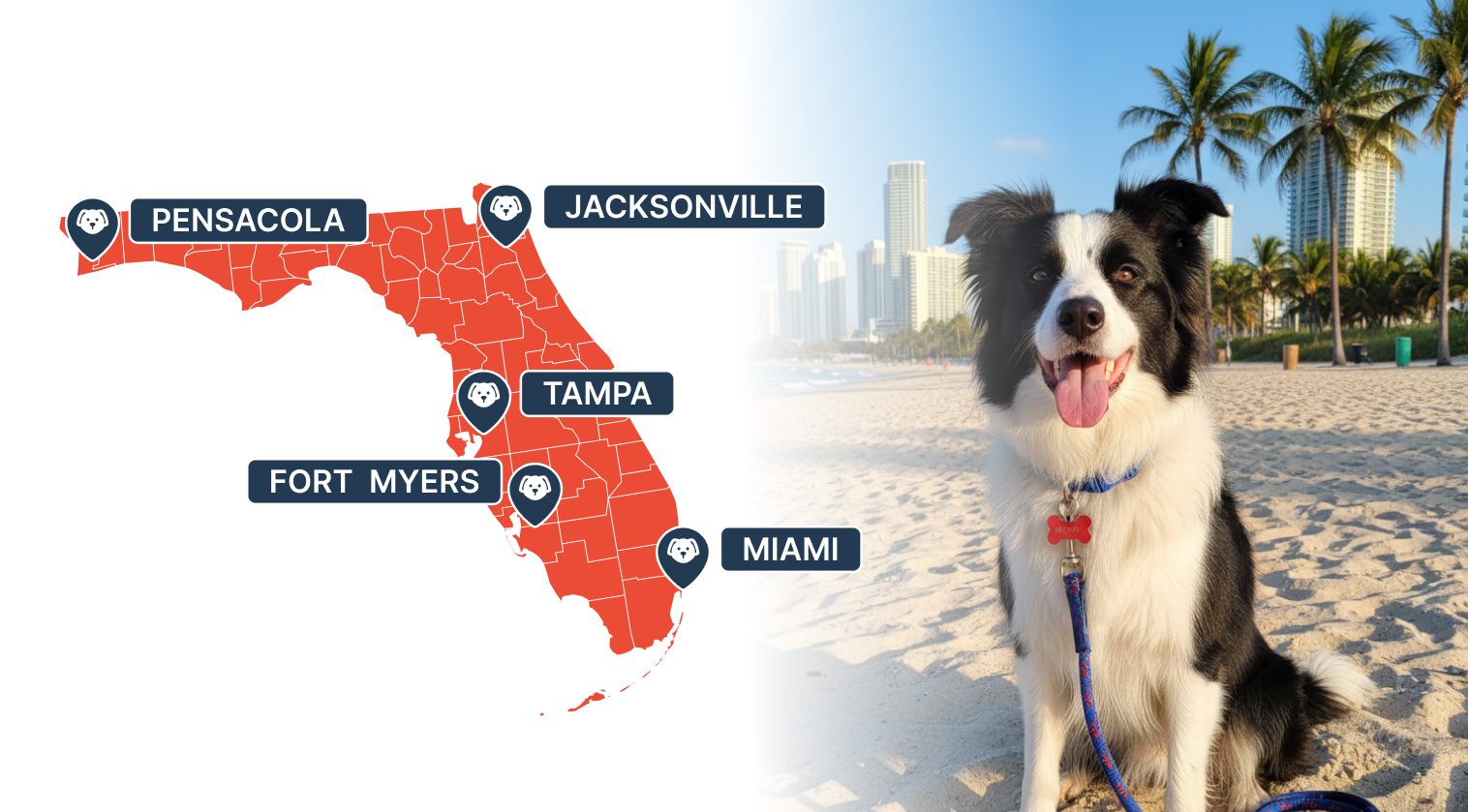
Below, we overview ESA laws in the most popular cities in Florida; to find out more, including how to get a legally valid ESA letter in these cities, click on the linked heading for the city you’re curious about.
ESA Laws in Miami
The competitive rental market in Miami requires many residential properties to have strict pet restrictions. These, however, do not apply to emotional support animals when you have a valid ESA letter. High-rise apartments in Brickell, Edgewater, Downtown, and Midtown must honor ESA housing laws and cannot charge pet fees.
Miami’s vibrant pet-friendly culture, with its cafes and shops, welcomes dogs in Wynwood, Coconut Grove, and Coral Gables. ESAs, however, have no public access rights, and the discretion to allow them lies solely with the business.
ESA Laws in Orlando
The tourist and college areas in Orlando often receive many ESA requests. A compliant Florida ESA letter waives off pet deposits, monthly pet fees, and any breed restrictions. This applies to areas like Lake Nona, Winter Park, and the UCF district.
Orlando offers many pet-friendly venues, but ESAs remain pets in public settings. Theme parks and resorts are only required to accommodate service animals.
ESA Laws in Tampa
Tampa’s popular housing markets, including Hyde Park, South Tampa, and Seminole Heights, commonly enforce breed and weight restrictions for pets; however, these must be waived for ESAs with a valid letter. Property managers may request license verification from your LMHP, which is permitted under Florida law.
Tampa is home to dog-friendly restaurants, bars, and waterfront parks. Emotional Support Animals do not have public access rights in certain places unless the business chooses to allow them.
ESA Laws in Jacksonville
Jacksonville’s vast geographic area results in varying pet policies across different neighborhoods. Still, ESA housing rights are consistent. Landlords in Florida must accept an emotional support animal (ESA) letter and cannot charge pet deposits or additional fees for pets.
The city offers many dog-friendly beaches and parks, but ESAs do not receive special permissions in public recreational areas.
ESA Laws in St. Petersburg
St. Petersburg’s walkable downtown and arts district features many pet-friendly patios and small businesses. However, whether an ESA can enter these locations depends on the individual store’s policy, not the law. Landlords in Kenwood, Old Northeast, and downtown St. Pete must accept valid ESA letters and cannot deny housing based on breed or size, unless a genuine safety issue exists.
ESA Laws in Other Florida Cities
Cities such as Hialeah, Tallahassee, Gainesville, Fort Lauderdale, Sarasota, and Fort Myers follow the same ESA regulations. Student-heavy areas may receive more documentation requests, but housing providers statewide must still comply with FHA and Florida Statute §760.27.
ESAs vs Psychiatric Service Dogs in Florida
Emotional support animals and psychiatric service dogs (PSDs) both assist people with mental health conditions, but they serve different roles and receive different legal protections. ESAs provide comfort and emotional relief but are not required to perform tasks. PSDs, on the other hand, are trained to complete specific tasks such as interrupting panic attacks, guiding during dissociation, retrieving medication, or grounding the handler.
Under the ADA, psychiatric service dogs (PSDs) have full public access rights across Florida, including restaurants, stores, hotels, and transportation. Emotional support animals (ESAs) do not have these rights. If your disability requires trained tasks instead of general emotional support, a PSD may be a more suitable option. For a deeper understanding of PSDs and how they differ from ESAs in Florida, consider reviewing US Service Animals’ PSD resources.
How to Get a Psychiatric Service Dog in Florida
The process of obtaining a PSD in Florida involves more steps than getting an ESA. First, you must be diagnosed with a qualifying psychiatric disability such as PTSD, panic disorder, or major depression. Next, the dog must be trained, either professionally or through an owner-led program, to perform specific tasks related to your disability.
US Service Animals offers an online PSD training program designed to teach public access skills and specialized task training. You can begin by completing their PSD training course consultation form.
FAQs About Florida Emotional Support Animal Laws
Florida ESA laws come with unique state requirements, so residents often have similar questions about ESA rights and documentation. Below are the most common questions.
Does Florida Recognize Emotional Support Animals?
Yes. Florida recognizes ESAs and requires landlords to accommodate them under both federal law and Florida Statute §760.27. This applies in all cities, including Miami, Tampa, Orlando, Jacksonville, and St. Petersburg.
Who Can Write an ESA Letter in Florida?
A Florida ESA letter must be written by a mental health professional or healthcare provider licensed to practice in Florida. This includes psychologists, therapists, counselors, psychiatrists, and medical doctors.
How Fast Can I Get an ESA Letter in Florida?
Many people receive their ESA letter within 24–48 hours after completing a mental health evaluation. Telehealth services help Floridians in cities like Orlando or Miami get rapid assessments.
Are Online Consultations for ESA Letters Legal In Florida?
Yes, as long as the provider is Florida-licensed and performs a legitimate evaluation. Telehealth ESA services are legal and widely used throughout the state.
Can a Landlord Deny an ESA Letter in Florida?
A landlord can only deny an ESA if it poses a threat to safety, causes excessive damage, or if the documentation is fraudulent. Otherwise, the landlord must accept a valid ESA letter.
Can A Landlord Charge a Pet Deposit for an Emotional Support Animal In Florida?
No. Florida landlords cannot charge pet fees, deposits, or pet rent for ESAs statewide.
Can I Bring My ESA to Work in Florida?
Florida employers are not legally required to permit ESAs; however, some may choose to do so. You can request accommodations, but approval is not guaranteed.
Are Emotional Support Animals Allowed in Hotels in Florida?
Hotels in Florida do not have to allow ESAs because these animals are not protected under ADA or FHA lodging rules. Pet-friendly hotels may permit them, but can charge fees.